Index Community Space Landing Page
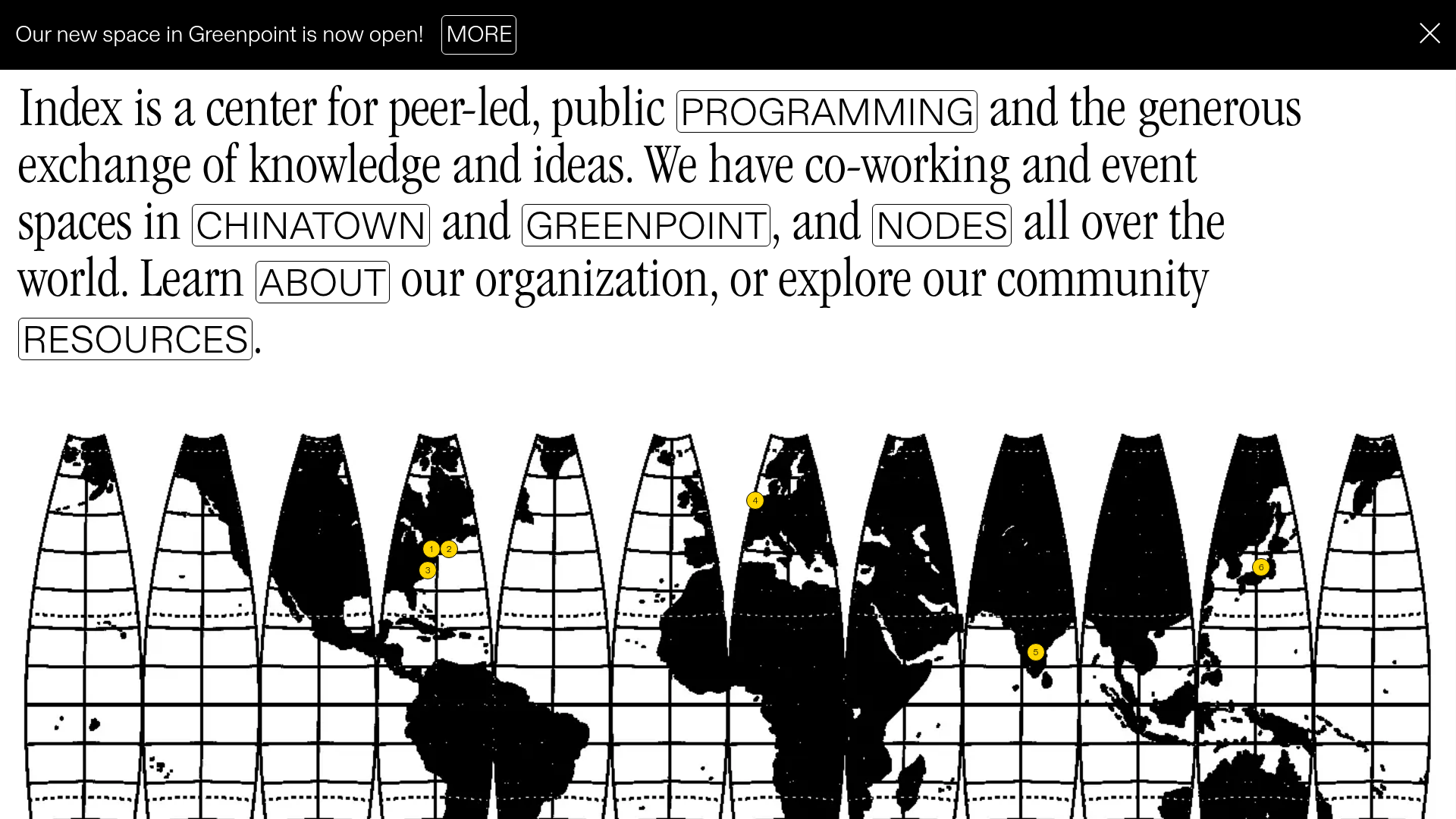
A minimalist, text-heavy landing page featuring a segmented world map visualization and an interactive sentence-based navigation layout.
Overview
Index is a minimalist landing page for a decentralized community organization, utilizing a conceptual "sentence-as-navigation" design and a segmentedGoode Homolosine world map. It is an excellent clone reference for projects looking to break away from traditional grid-based landing pages in favor of typography-driven storytelling and creative geographic visualizations.
Design System
- Color Palette & Visual Hierarchy: The site uses a high-contrast binary palette of pure black (#000000) and white. Primary emphasis is placed on yellow (#FFF600) for interactive map markers, creating a sharp visual focus against the monochromatic background.
- Typography System: A high-contrast, condensed Serif typeface is used for the main body text, set at a large scale to serve as the interface itself. It is paired with a monospace font for utility elements like the top banner. Text-decoration like boxing (
border: 1px solid) is used instead of traditional buttons to denote interactivity. - Page Structure: The layout follows a linear narrative flow: a top-bar announcement, a central mission statement that functions as a nav-menu, and a large-scale SVG/graphical world map illustrating global "nodes."
- Reusable Components:
- Interactive Sentence: A modular text block where specific words are wrapped in frames to serve as internal or external links.
- Announcement Banner: A black-on-white utility bar with a "More" button and a "Close" (X) icon.
- Segmented Map Visualization: A stylized world map featuring numbered circular markers (nodes) that serve as location-based triggers.
- Interaction Patterns: Hover states likely involve inverted colors or line weight changes on the boxed terms. The numeric pins on the map provide a compact way to display complex geographic data without cluttering the screen.
- Implementation Clues: The HTML structure uses clean semantic containers with high-level typography classes, suggesting a custom CSS framework or utility-first approach (like Tailwind) to handle the precise spacing between boxed text and surrounding prose.
Use Cases
- Who should clone this pattern: Creative agencies, non-profit organizations, DAOs, or research collectives that want to emphasize a sophisticated, intellectual, and decentralized identity.
- Effective Remixes: This layout works well for portfolio sites where "About" and "Services" can be integrated directly into a mission statement, or for event directories where locations are mapped globally.
- Practical Remix Directions: Swap the high-contrast serif for a brutalist sans-serif for a more modern tech feel; replace the world map with a technical diagram or a project archive grid; or adapt the navigation box style to a secondary color (e.g., neon blue or green) for a cyberpunk aesthetic.
- Suggested Clone Scope: A quick section clone of the "Interactive Sentence" is ideal for those wanting a unique hero section. A full-page clone is recommended for projects that require a stark, conceptual landing experience with minimal scrolling.
Related Inspirations
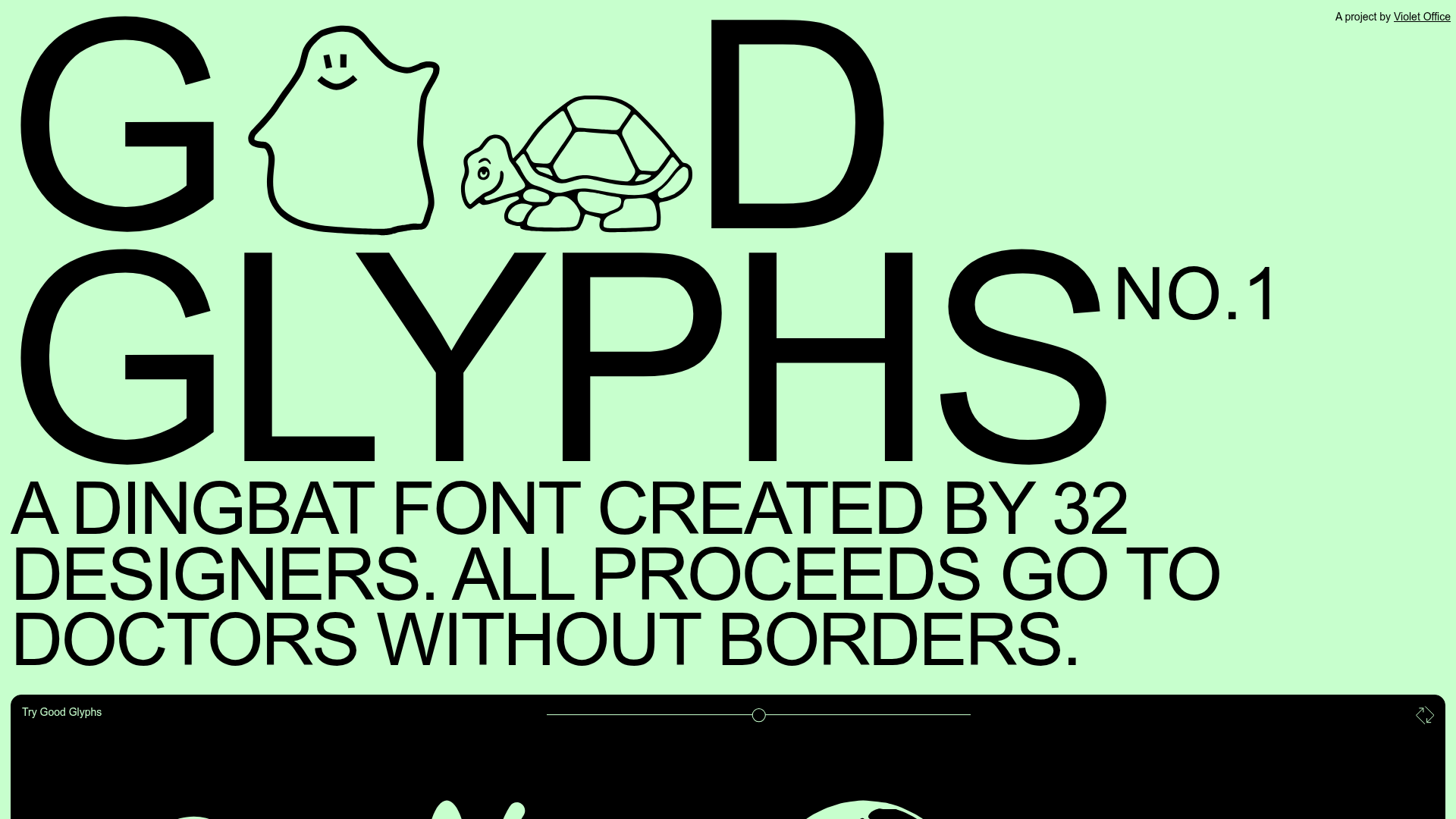
Good Glyphs Font Showcase Landing Page
A single-page layout featuring an interactive type tester, donation form with custom amount logic, and a contributor gallery using swiper-based glyph previews.
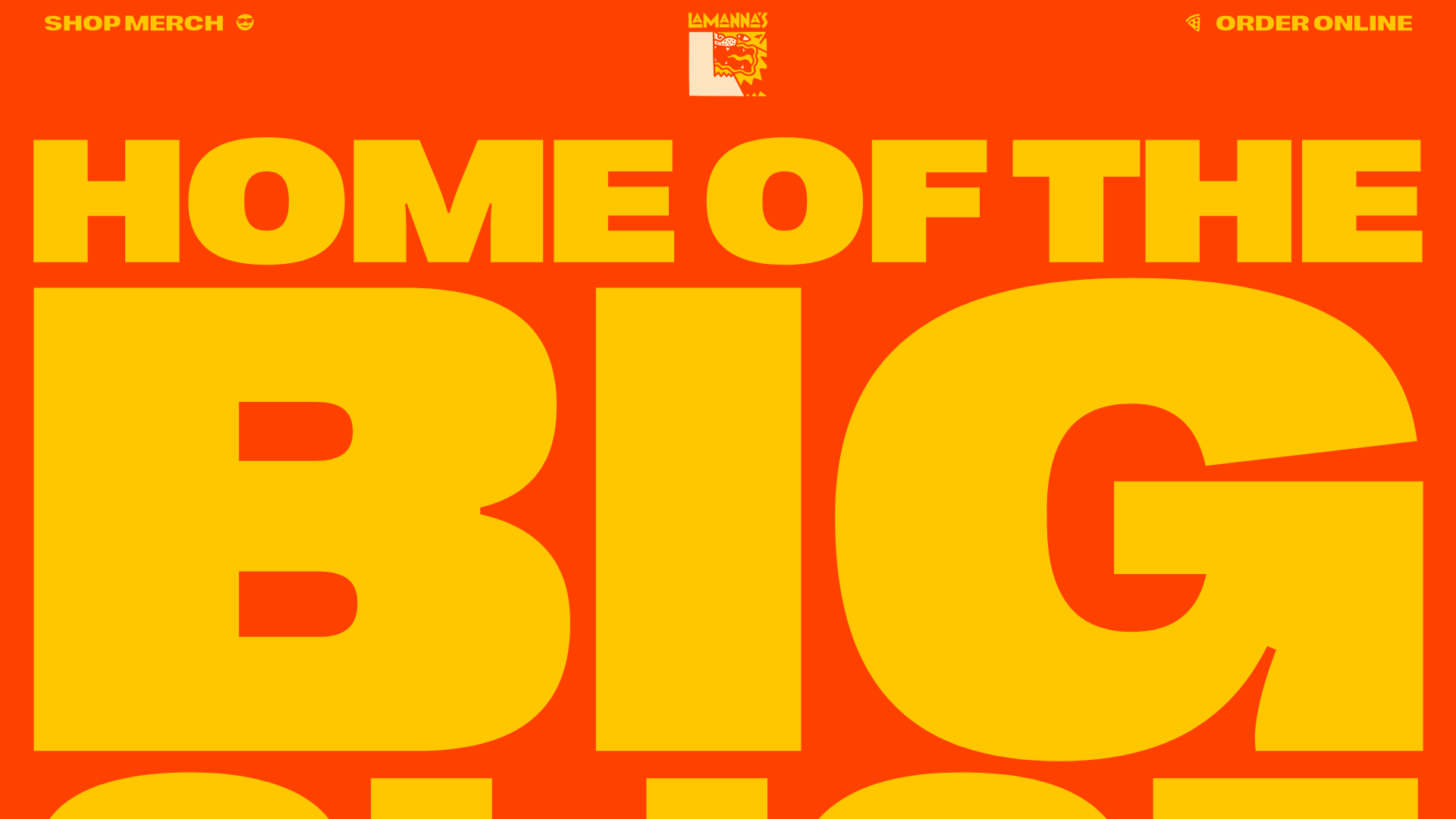
Lamanna's Bakery Vibrant Landing Page
A bold, high-contrast Italian bakery site featuring massive typography, parallax floating elements, marquee banners, and a flickity-powered product carousel.
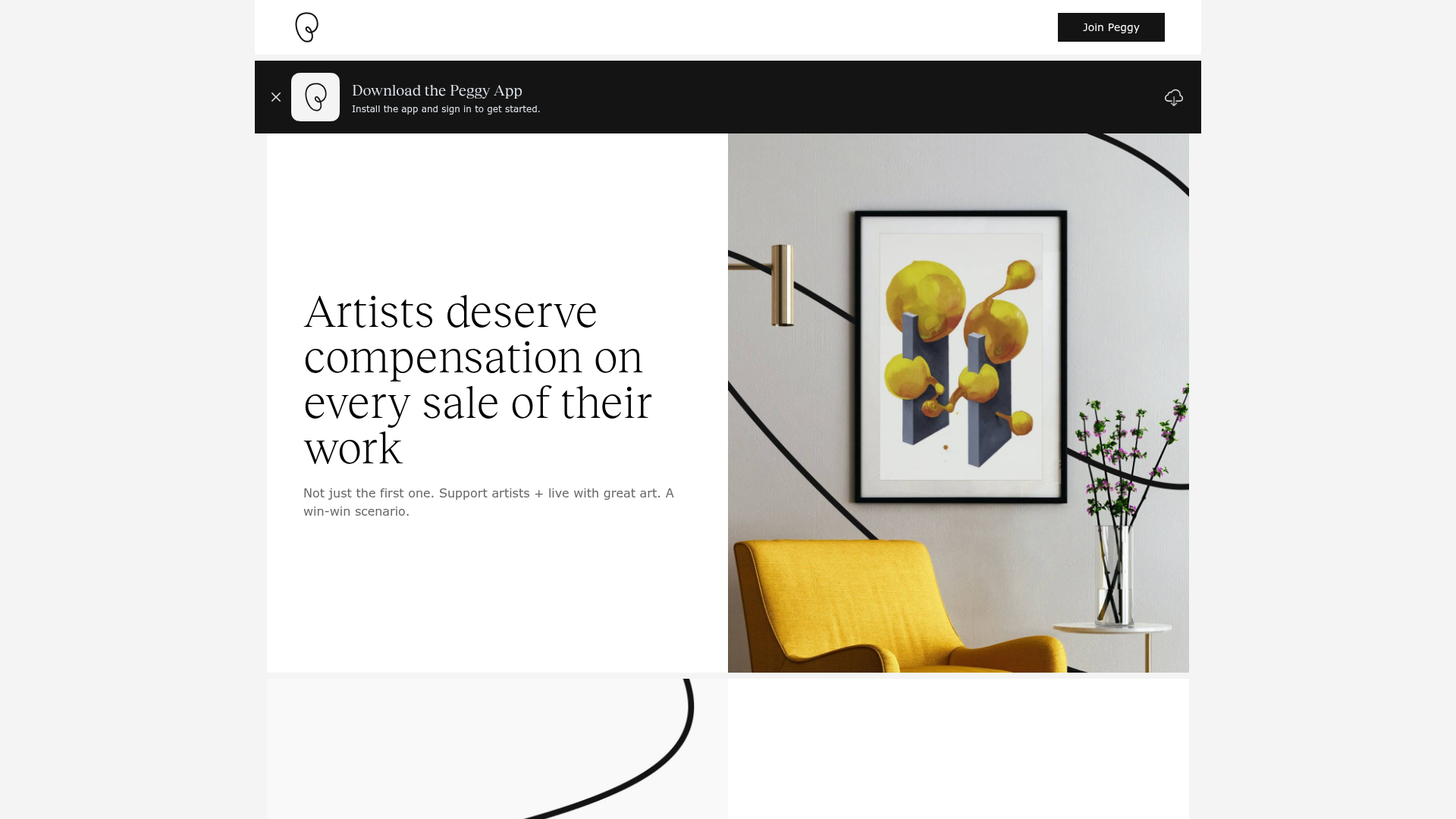
Peggy Art Royalties Pitch Page
A clean storytelling layout featuring alternating image-text sections, a three-column testimonial grid with circular avatars, and a icon-based feature grid for brand values.
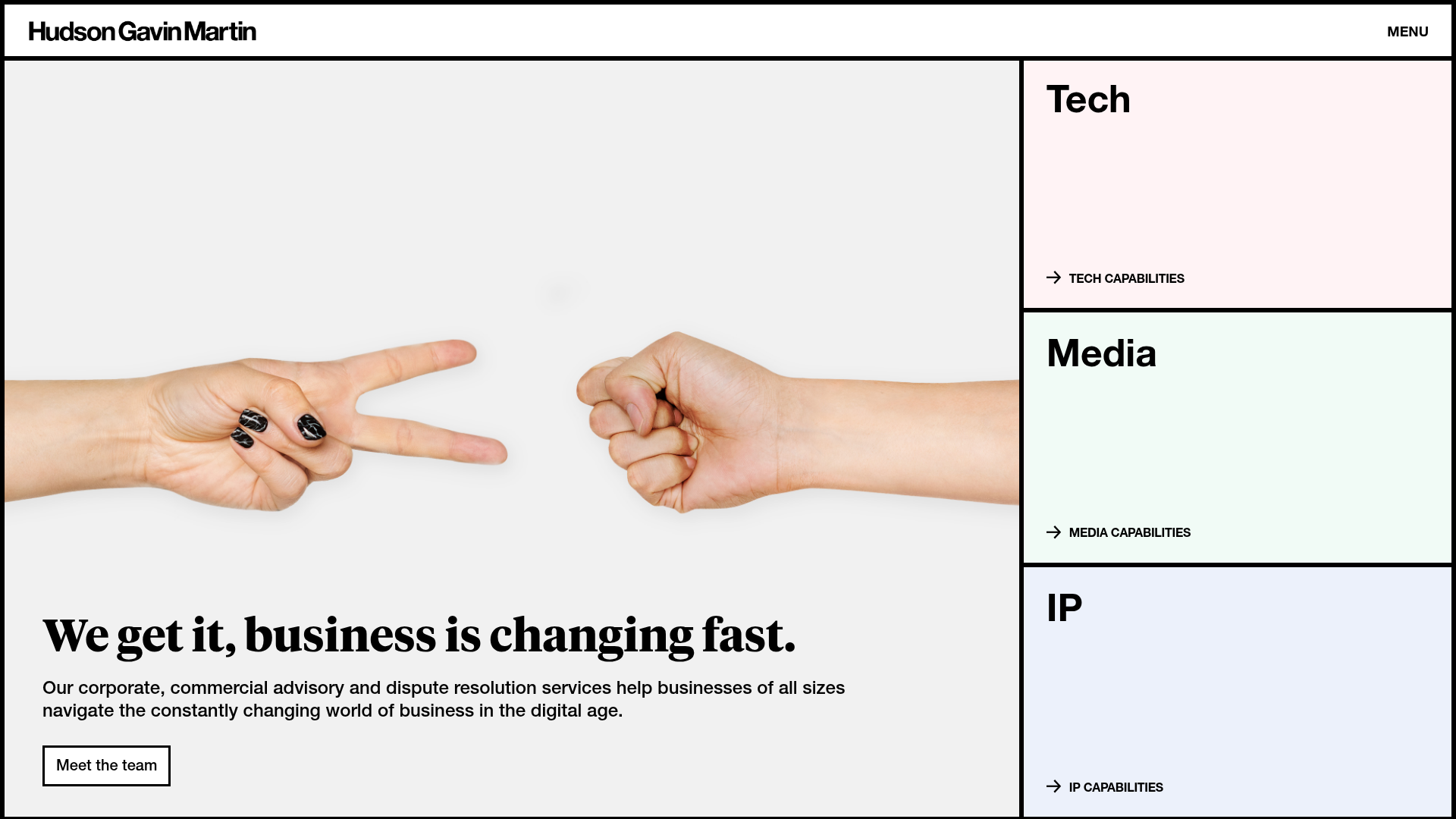
Hudson Gavin Martin Corporate Law Landing
A professional service homepage featuring a minimalist grid-based hero, color-themed navigation blocks, and a bento-style insights feed with subtle hover interactions.
Special Offer Studio Landing Page
Minimalist full-screen landing page featuring a centered logo, bold flat-color background, and accessible skip link structure using Nuxt.js and Tailwind CSS.
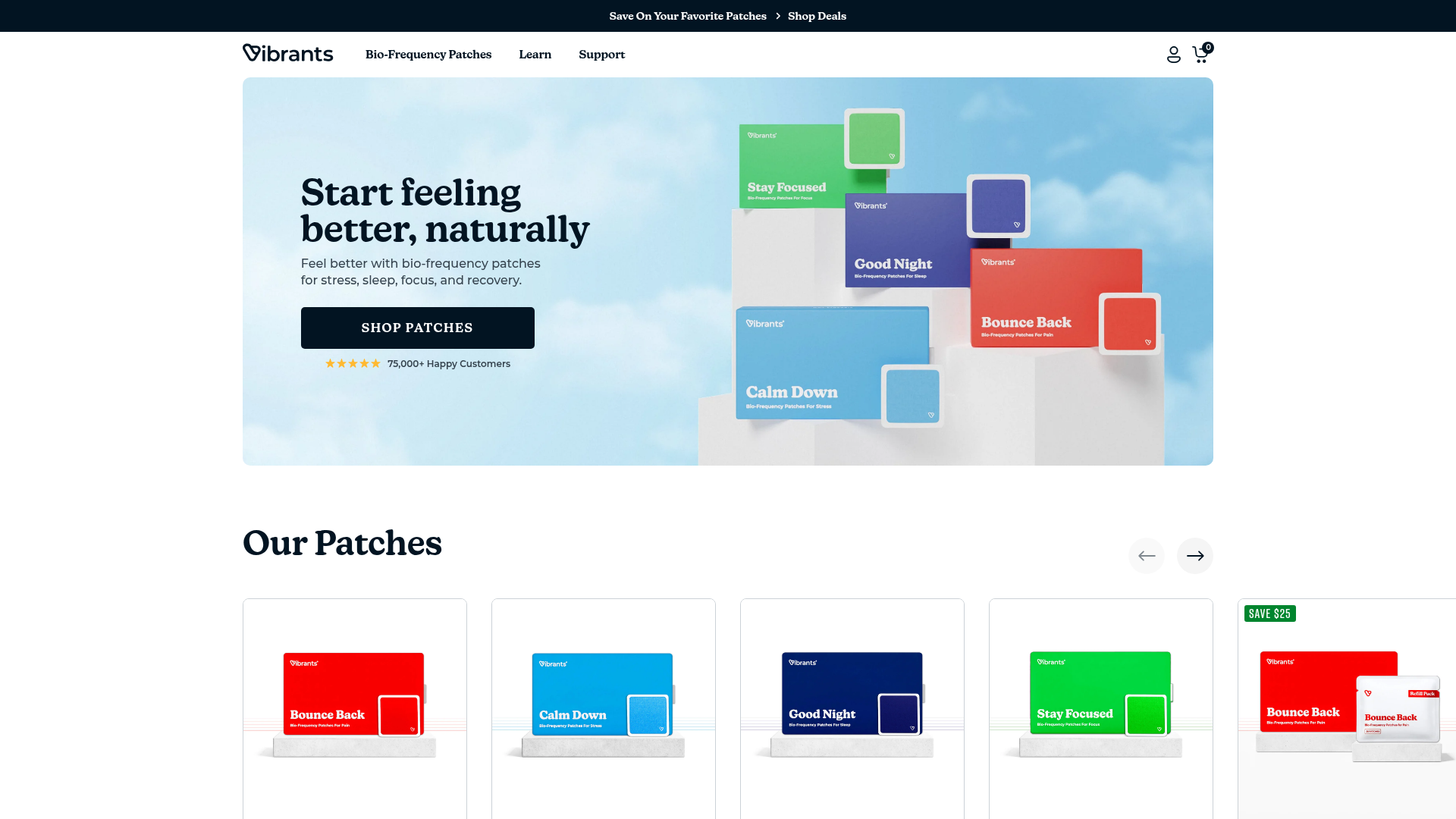
Vibrants Wellbeing E-commerce Landing Page
A clean Shopify-style landing page featuring a full-width hero with overlaid product cards, a horizontal product slider, and interactive cart drawer with utility progress bars.
