Accept & Proceed Creative Portfolio
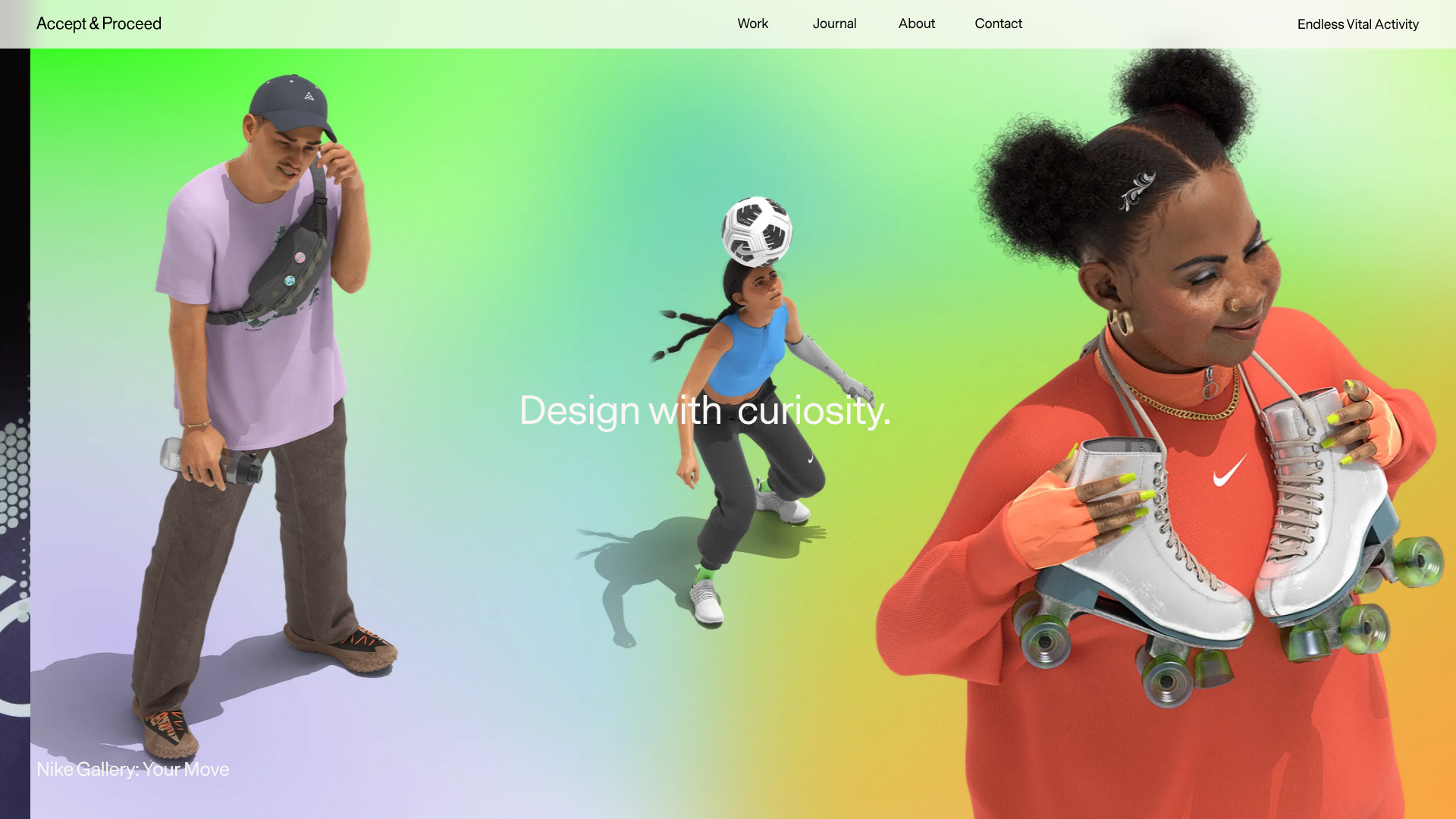
An agency design portfolio featuring a full-screen dynamic slider with animated text overlays, a custom cursor with interaction states, and a clean project grid using tagged CMS cards.
Overview
This is a high-end agency portfolio website that prioritizes atmospheric storytelling through a sophisticated full-screen slider and custom interaction model. It is a premier reference for builders looking to implement complex GSAP-style transitions, a custom-branded cursor, and high-performance CMS-driven grids that blend video and imagery seamlessly.
Design System
- Color Palette & Visual Hierarchy: The site uses a high-contrast foundation (pure whites and deep blacks) overlaying vibrant, ambient-mapped gradients. Visual hierarchy is established through a "scale-first" approach, where the hero slider dominates the viewport while UI elements like the top navigation and secondary project titles are kept minimal and peripheral.
- Typography: A clean, modern sans-serif (likely a custom Swiss neo-grotesk) is used. It features a robust scale: massive
H3headers for overlaying the dynamic slider, and smaller, utility-focused monochrome type for the navigation and project metadata tags. - Page Structure:
- Dynamic Hero: A full-screen slider (
main-slider) with a split-layer transition effect and a kinetic text mask (slider-overlay-words-mask) that cycles through design values. - Project Grid: A staggered 2-column CMS list (
cms-collection-list) featuring large-scale cards with integrated video embeds. - Journal Section: A dense, square-ratio grid for editorial content.
- Accordion Workshop: A "Endless Vital Activity" section utilizing a clean, line-separated accordion (
fs-accordion) to manage heavy text and podcast/video content without cluttering the UI.
- Dynamic Hero: A full-screen slider (
- Interaction & Motion: The site features a highly customized cursor (
custom-cursor-wrap) that changes text (e.g., "Prev", "Next", "View Project") and grows based on the hover target’scc-typeattribute. Elements utilize a "placeholder wrap" logic for a consistent fade-in sequence as the user scrolls. - Implementation Clues: The HTML reveals a heavy reliance on Webflow CMS data attributes for custom logic, likely combined with standard libraries like Finsweet Attributes for the accordions (
fs-accordion-element) and potentially GSAP for the slider's coordinate-based transforms (translate3d).
Use Cases
- Who should clone this: Creative directors, design studios, and high-end architects who need a portfolio that feels more like an "experience" than a traditional list of links.
- Remix Directions:
- The Hero Slider: Clone the
main-sliderto replace static banners with a dynamic carousel that uses horizontal image shifts and vertical text masks simultaneously. - The Accordion List: Extract the S4 "Podcast" accordion for any site requiring a clean way to host mixed media (audio links, descriptions, and video players) in a vertical stack.
- Tagging System: Reuse the
project-tagcomponent, which includes a distinct icon-separator-text structure, perfect for categorizing complex service offerings.
- The Hero Slider: Clone the
- Suggested Scope: A full-page clone is best for those wanting to maintain the rigorous whitespace and custom interaction feel; however, the
cms-cardlogic is easily portable as a standalone "remixable" grid for any external CMS project.
Related Inspirations
Johanna Jaskowska 3D Portfolio Showcase
A minimalist creative portfolio featuring a full-screen WebGL 3D environment, interactive cursor-following navigation, and a dynamic thumbnail expansion component.

Studio Amos Fricke Digital Portfolio
A minimalist, dark-mode portfolio featuring a full-screen immersive video player, an interactive splash screen, and custom UI controls for high-end boutique brand showcases.

OHZI Interactive Studio WebGL Showcase
A high-performance interactive portfolio featuring WebGL/Three.js environments, smooth section transitions, localized video case studies, and a progress-bar navigation system.

Cinderbloc Minimalist Creative Portfolio Landing
A high-performance creative agency site featuring a WebGL-enhanced hero, lottie logo animations, and a sophisticated full-screen project navigation with hover-triggered media previews.
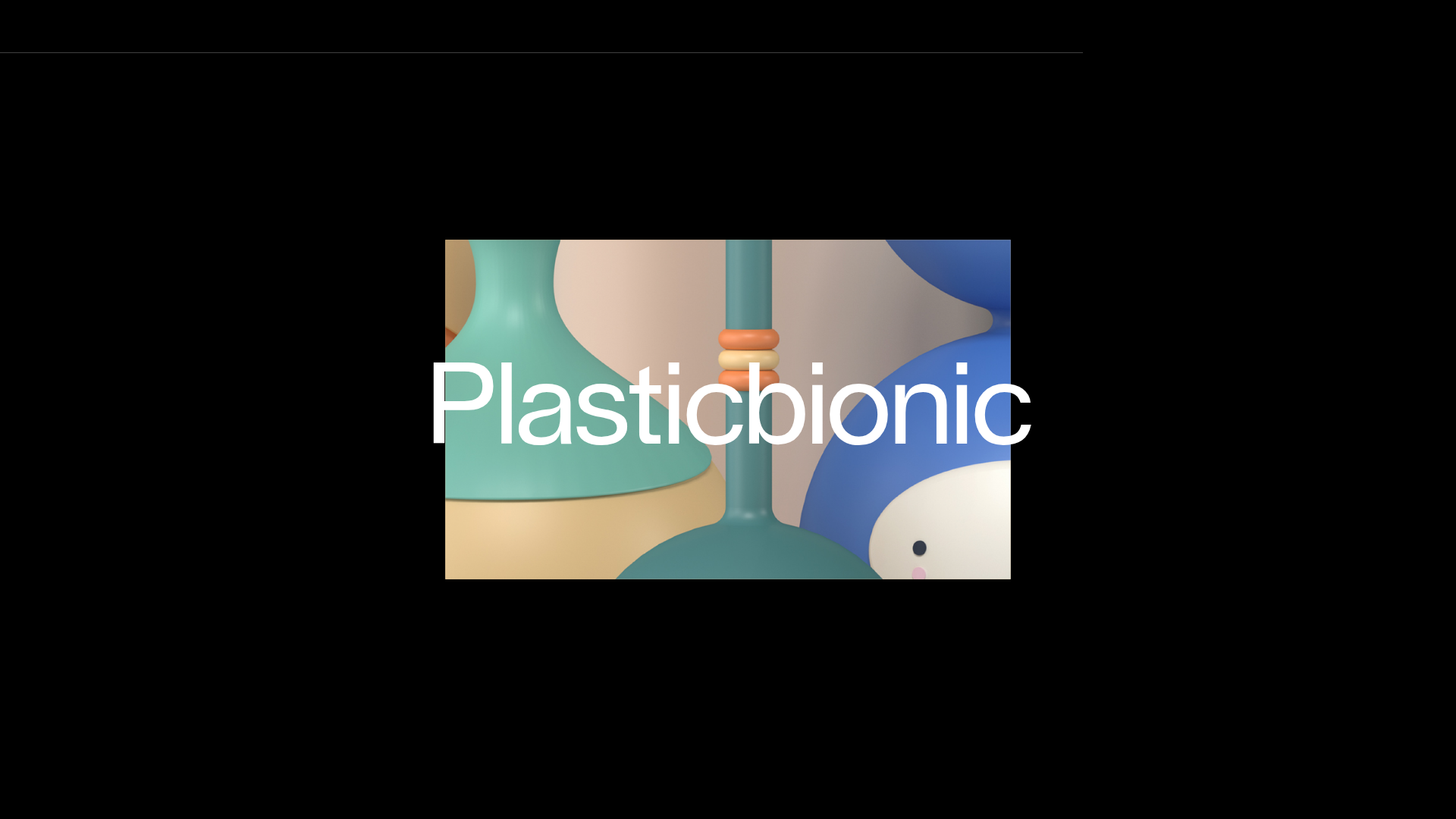
Plasticbionic Design Studio Portfolio Portfolio
A high-end portfolio featuring a fullscreen parallax scroll, smooth text reveal animations, and a vertical project gallery with color-coordinated background transitions.

Elva Agency Portfolio Landing Page
Features a typography-heavy hero with inline icons, horizontal scroll work gallery, sticky text transitions, and a scroll-triggered sprite animation section.
