Bruno Simon 3D Interactive Portfolio
A Three.js and WebGPU driven 3D game environment featuring interactive navigation, custom touch controls, and a canvas-based layout for immersive web experiences.

Overview
This is a benchmark interactive 3D portfolio that transforms traditional web navigation into an immersive game-like environment using Three.js and WebGPU. It is a premier reference for builders looking to clone a seamless integration between a WebGL canvas and a functional HTML user interface layer.
Design System
- Color Palette & Visual Hierarchy: The design utilizes a high-contrast dark-mode foundation (#1a131b base seen in screenshot) to allow 3D objects to pop. Hierarchy is established through a floating HUD (Heads-Up Display) with clear semantic icons and rounded buttons that contrast against the atmospheric depth of the 3D scene.
- Typography System: The site uses a multi-layered font system including 'Nunito' (sans-serif) for general UI, 'Amatic SC' for characterful headings, and 'Pally-Medium' for technical or stylized text. This trio balances readability with a playful, creative aesthetic.
- Page Structure & Section Flow: The entire application is contained within a
.gamewrapper. Navigation is spatial rather than vertical; users travel through the 3D world to discover sections (Portfolio, About, Socials) which trigger HTML modals (.js-modals) and notifications (.js-notifications). - Reusable Components: The touch control system (
.js-touch-buttons) is a high-value clone target, offering specific logic for 'Interact', 'Unstuck', and directional 'Previous/Next' navigation. These are essential for any mobile-based 3D experience. - Interaction Design: The site features a hybrid control scheme. A menu trigger (
.js-menu-trigger) with a hamburger-to-cross animation manages navigation, while a dedicated map trigger (.js-map-trigger) provides spatial orientation. Actions are signaled via a real-time notification queue (.js-items). - Implementation Clues: The HTML confirms a heavy reliance on Three.js (r183) and WebGPU for rendering. The UI is decoupled from the 3D logic, using standard DOM buttons and containers overlayed on the
.js-canvasfor accessibility and ease of styling.
Use Cases
- Who should clone this: Creative developers, game designers, and digital artists wanting to showcase work in a non-linear, exploratory format.
- Effective Remixes: This pattern can be remixed into immersive virtual showrooms for e-commerce, interactive educational exhibits, or gamified onboarding flows for SaaS products.
- Remix Directions: Builders can swap the 3D world assets (the .glb files) while retaining the robust touch-controls and modal system. For a more minimal approach, clone only the notification system and menu triggers for use in standard 2D creative sites.
- Suggested Clone Scope: A full-page clone is recommended for high-impact landing pages where immersion is the priority. However, the UI overlay (buttons and modals) can be cloned as a standalone framework for any canvas-based project.
Related Inspirations

OHZI Interactive Studio WebGL Showcase
A high-performance interactive portfolio featuring WebGL/Three.js environments, smooth section transitions, localized video case studies, and a progress-bar navigation system.
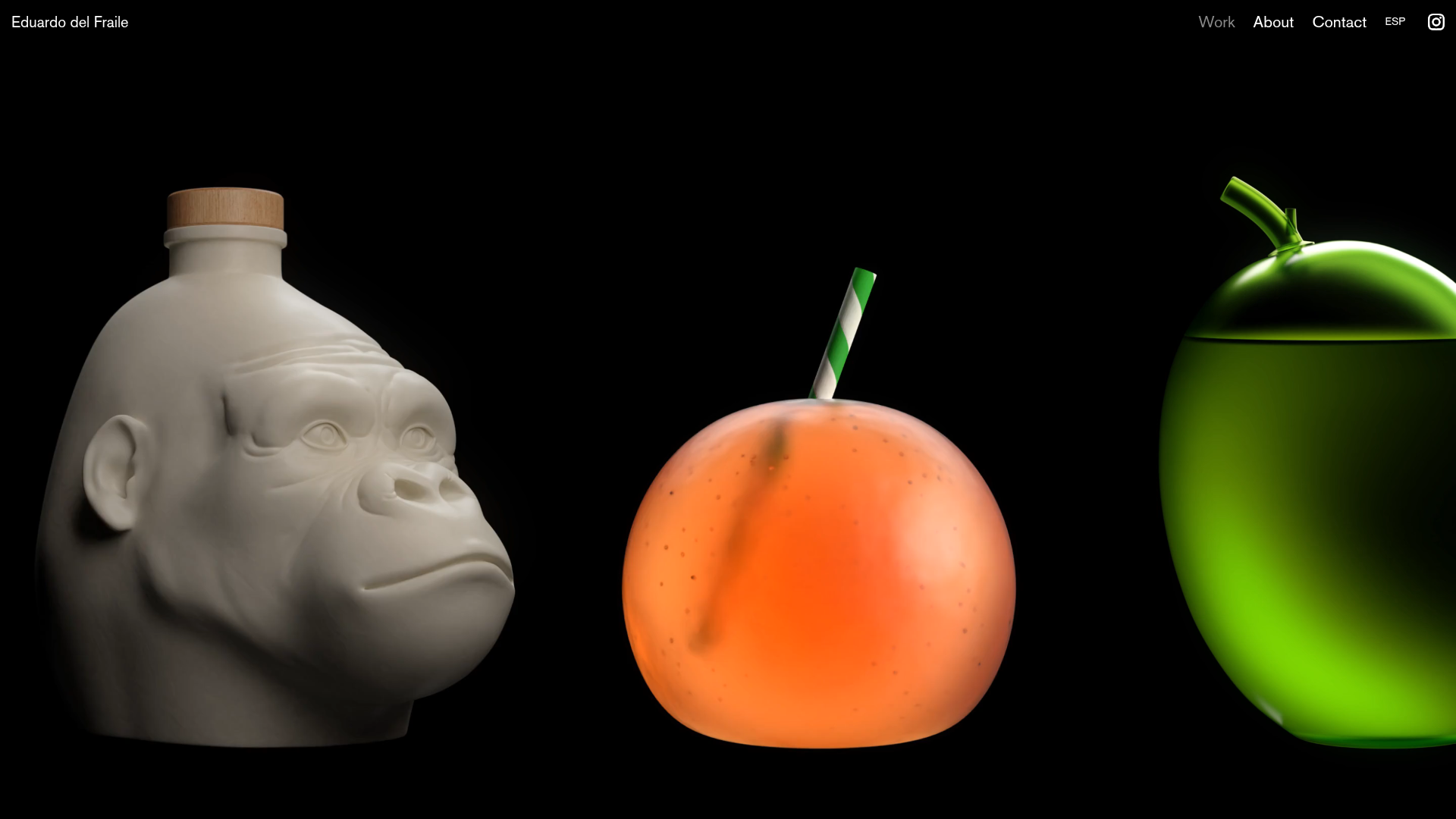
Eduardo del Fraile Horizontal Portfolio
A minimalist horizontal-scroll gallery featuring large-scale media blocks with integrated video-on-hover effects and a custom scrollbar tracker.
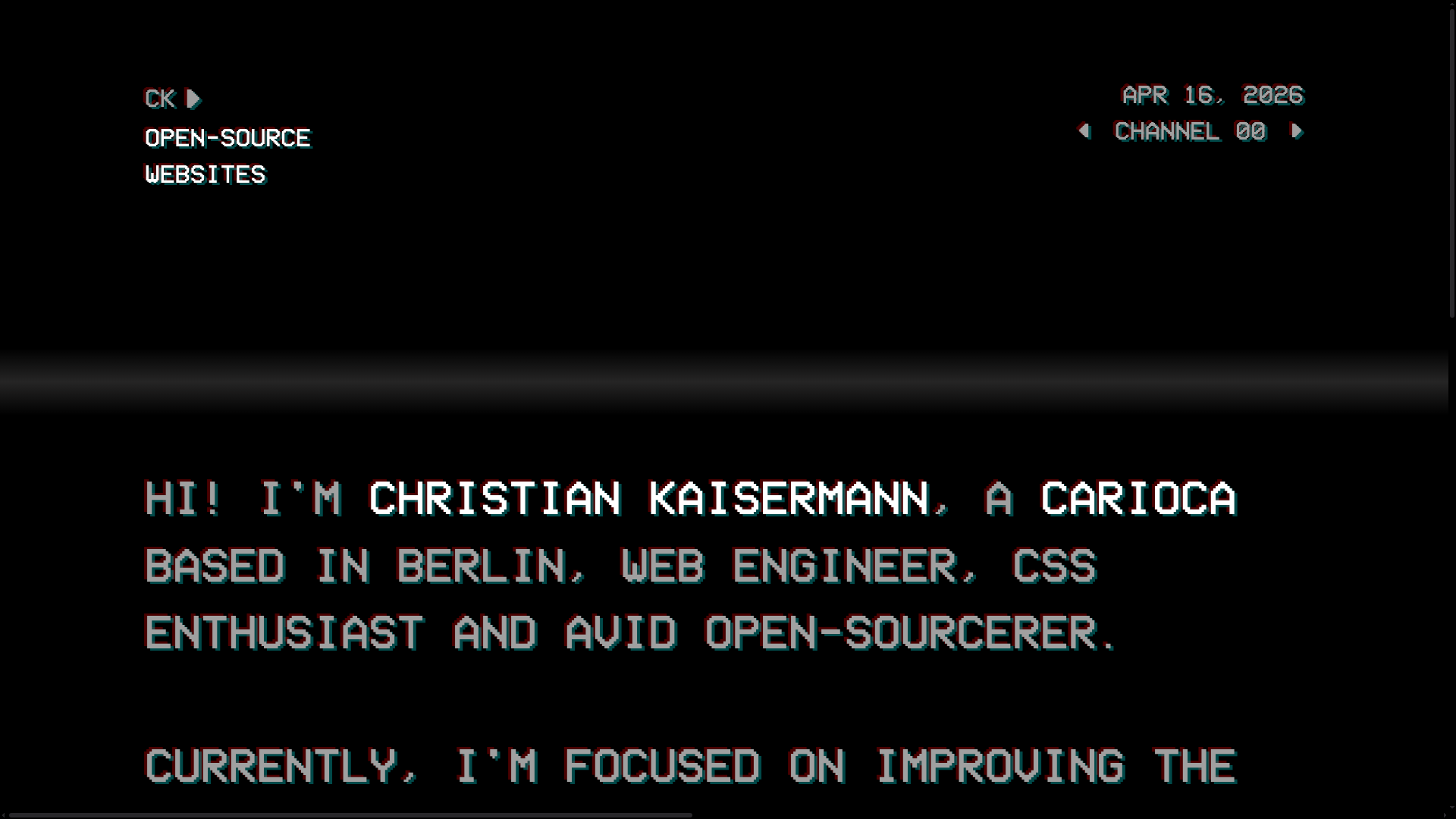
Christian Kaisermann Retro CRT Portfolio
A dark-themed developer portfolio featuring a 90s CRT television interface with glitch text effects, scanlines, and an interactive remote control navigation system.

Phantom Creative Agency Landing Page
Minimalist dark-mode hero layout featuring a sound-enabled interaction overlay, monochrome cookie banner, and accessible screen-reader-optimized content architecture.
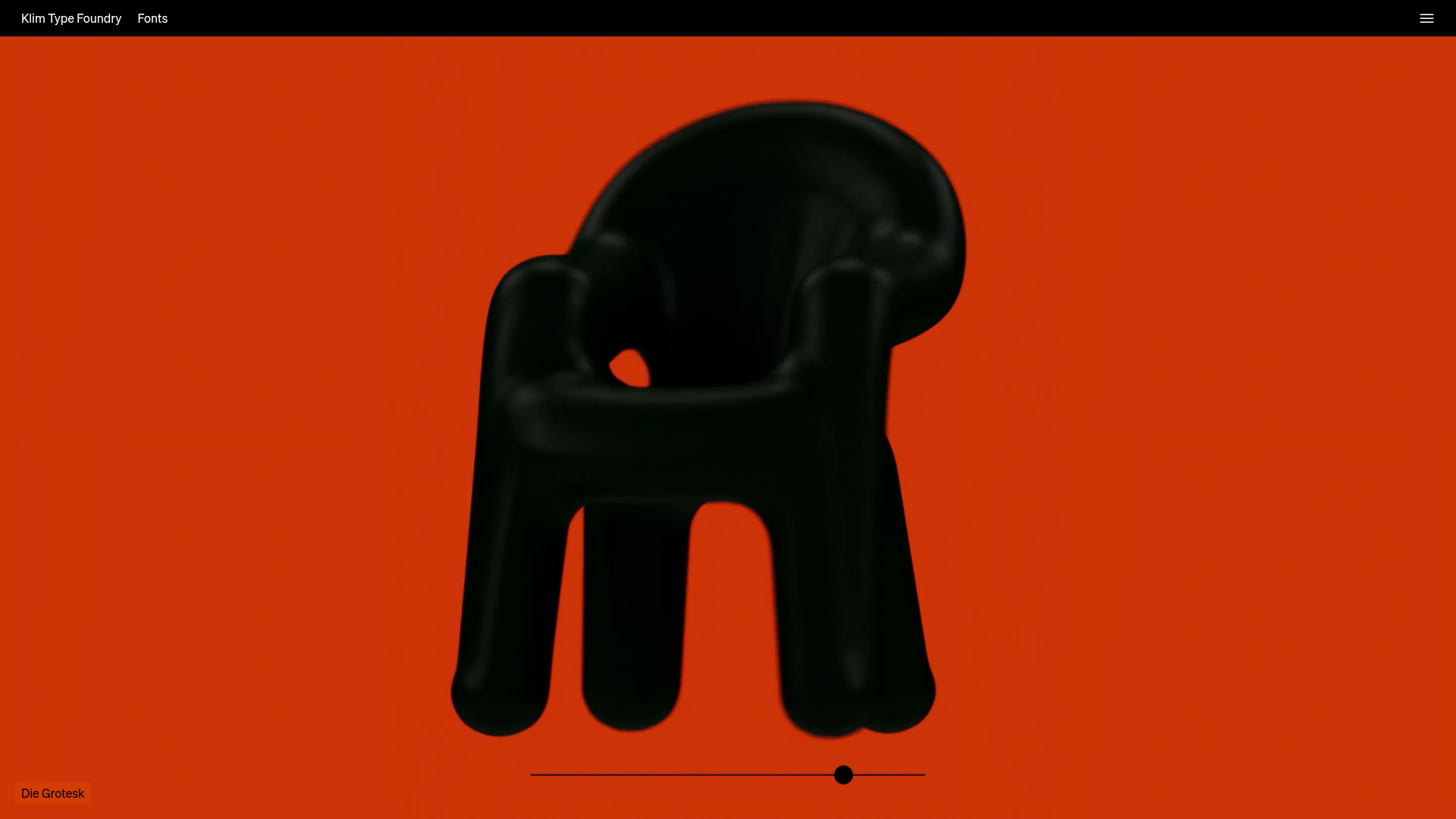
Klim Type Foundry Interactive Typography Landing Page
A high-impact landing page featuring a minimalist full-screen image gallery, interactive slider controls, and a clean, hidden navigation menu.
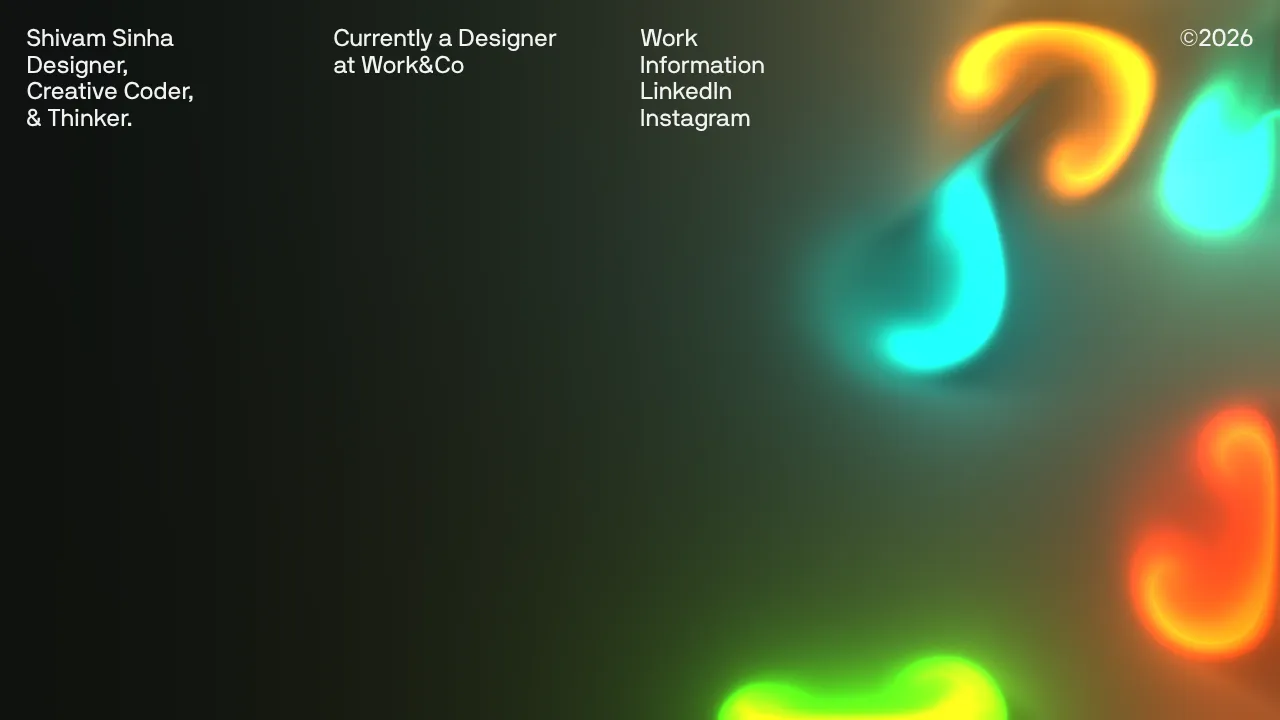
Shivam Sinha Portfolio Hero Landing
A minimalist portfolio layout featuring a full-screen interactive fluid-simulation canvas, clean typographic header, and a responsive navigation grid.
