Yamauchi No.10 Pixel Art Landing Page
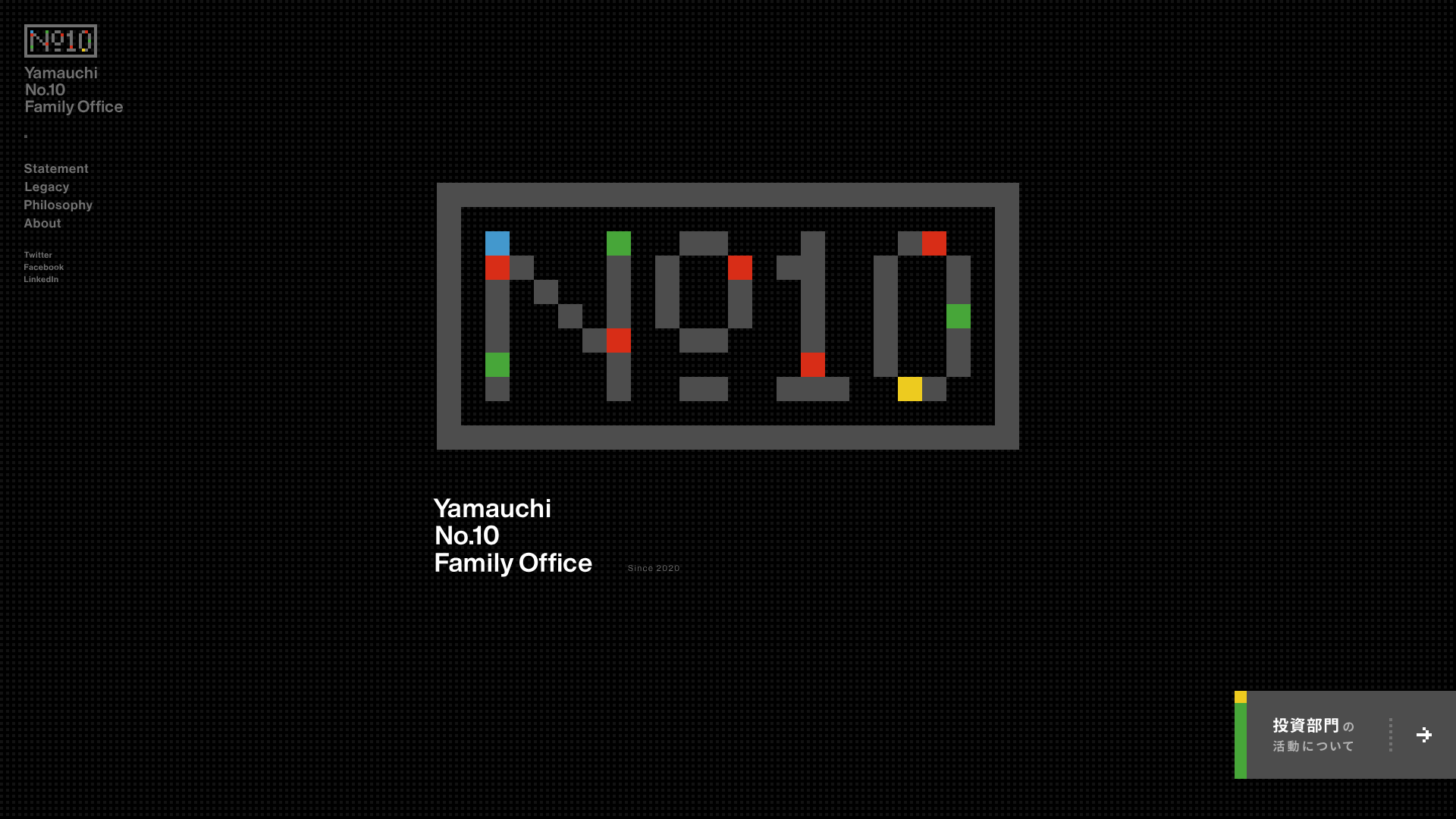
A dark-themed portfolio featuring a custom pixel-grid layout, chunky block-based typography, and interactive retro gaming-inspired UI components like the floating bento-style navigation.
Overview
This website is the digital home for the Yamauchi No.10 Family Office, utilizing a sophisticated retro-gaming aesthetic to honor the legacy of Nintendo’s founding family. It is a premier reference for clone/remix projects because of its masterful use of a pixel-grid layout, custom block-type rendering, and a high-contrast dark mode interface that feels both nostalgic and modern.
Design System
- Color Palette & Visual Hierarchy: A strictly dark background (#000000 or deep charcoal) serves as a canvas for a vibrant, high-saturation pixel palette. Accents of 'Nintendo' red, bright yellow, cobalt blue, and forest green are used sparingly to highlight key navigation nodes and decorative 'doodle' elements, creating a clear focal point against the monolithic grey typography.
- Typography System: The site uses chunky, custom-rendered block typography that mimics 8-bit characters. Scale is significant; the primary 'N010' logo and section headers (
01. STATEMENT, etc.) use large-scale pixel clusters, while body text is presented in a clean, legible sans-serif for functional readability in both Japanese and English. - Page Structure & Section Flow: The layout is a single-page scrolling experience divided into clear thematic zones: Introduction (Hero), Statement (Vision), Legacy (History), Philosophy (Values), and About (Activities/Leadership). Navigation is locked in a sidebar/floating hybrid style that persists as the user scrolls through the grid.
- Reusable Components: Notable components include the pixel-art logo container with color-coded blocks, the 'cube board' headers that use
data-doodleattributes for decorative icons, and the 'dots' dividers which serve as playful, low-fi section breaks. The floating 'Investment' widget in the bottom-right is a perfect example of a non-intrusive call-to-action (CTA). - Interaction & Motion Patterns: The HTML implies an 'Intro' sequence (
introLogo.png) and sound-based interactions. The UI uses 'hover' classes on nearly every interactive element (links, social icons, CTA buttons), suggesting subtle state changes with a 'high-click' tactile feedback loop. Transitions are likely snapped to a grid to maintain the architectural feel. - Implementation Clues: The structure uses a custom
cubeandsquareclass system for layout, withdata-scaleattributes (ranging from 4 to 32) power-scaling the pixel sizing. This suggests a custom CSS grid or canvas-based rendering engine designed specifically for pixel-perfect alignment.
Use Cases
- Who should clone this: Creative agencies, game studios, and family offices looking to project a distinct heritage while maintaining a tech-forward, 'nerd-culture' edge.
- Effective Remixes: This pattern can be effectively remixed for artist portfolios or technical documentation sites. Replacing the dark theme with a 'GameBoy' olive/grey palette or a high-contrast 'CGA' palette (magenta/cyan) would drastically change the mood while retaining the structural integrity.
- Practical Directions: Developers can reuse the sidebar navigation and floating CTA structure for any minimalist landing page. The 'Leadership' cards, which pair professional bios with pixel-art headers, are excellent for team pages that want to avoid traditional photography.
- Clone Scope: A full-page clone is recommended to capture the immersion of the grid system, but the individual 'Philosophy' list items (
li.square.listtop) are highly modular and can be extracted for use in feature lists or service overviews.
Related Inspirations
Christian Kaisermann Retro CRT Portfolio
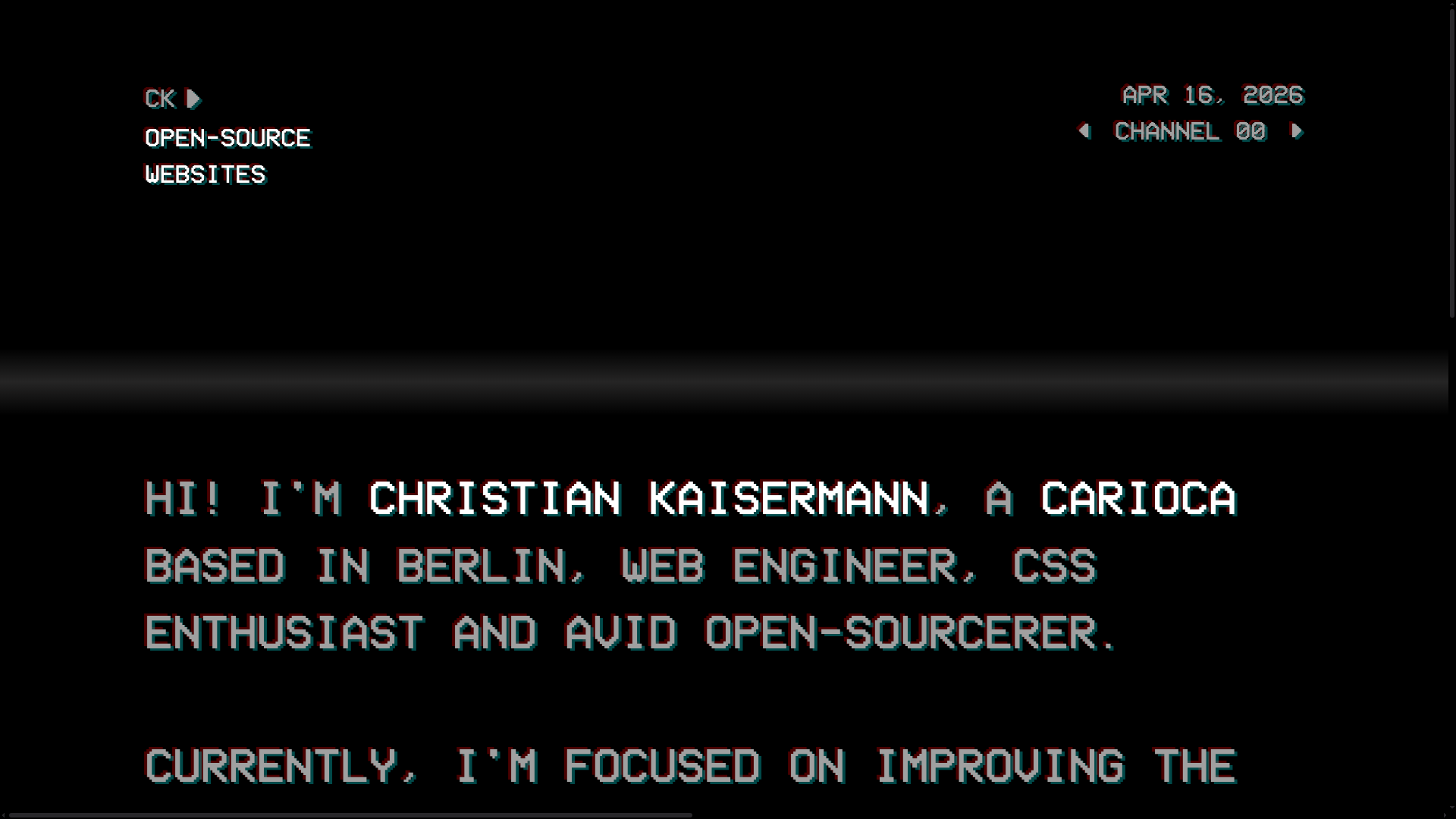
A dark-themed developer portfolio featuring a 90s CRT television interface with glitch text effects, scanlines, and an interactive remote control navigation system.
Valo Health AI Biotech Landing Page
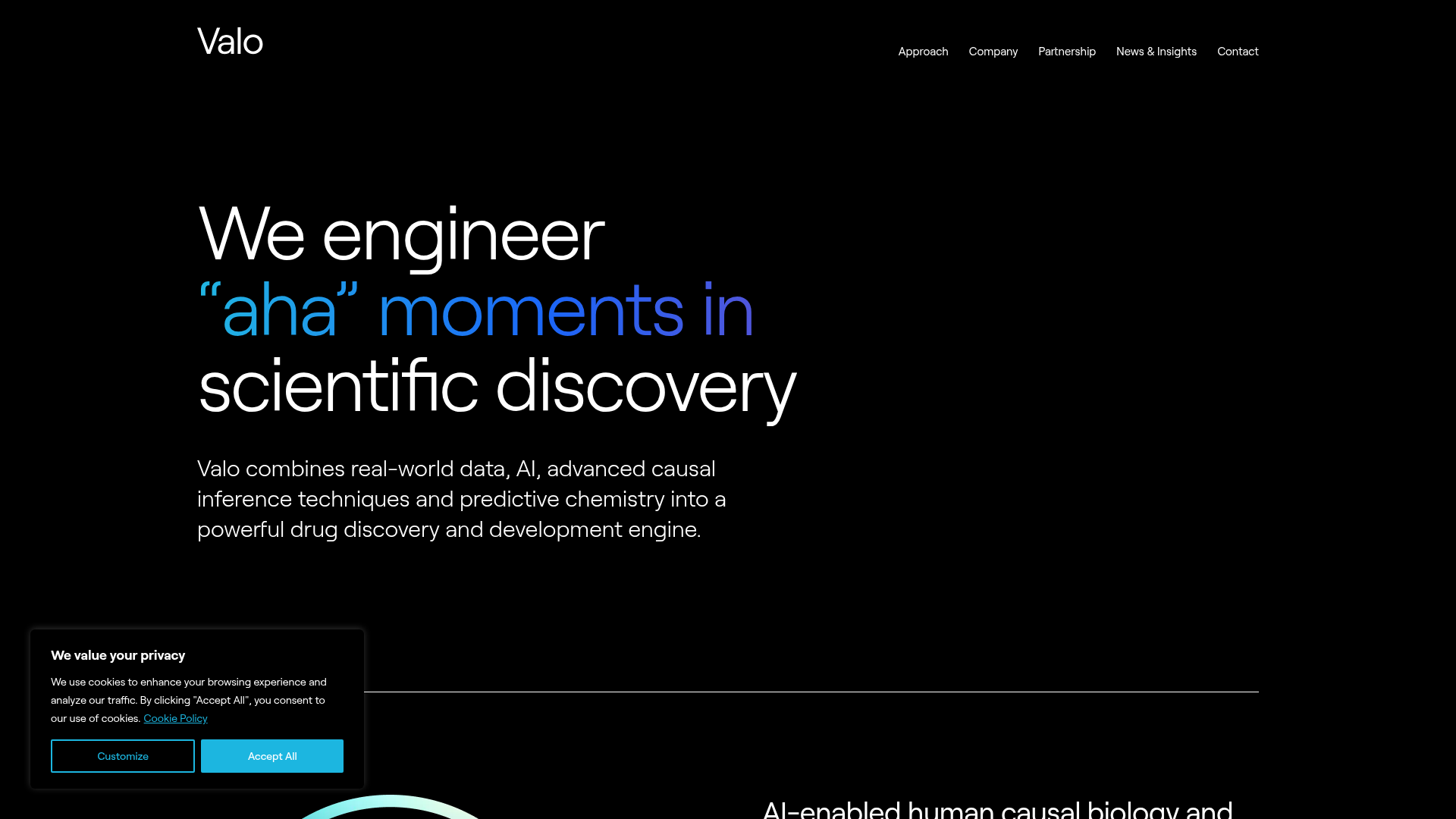
A dark-themed high-tech landing page featuring an animated gradient text hero, modular content sections with glassmorphism effects, and distinct typography scales for bold storytelling.
Fluid Touch Software Landing Page
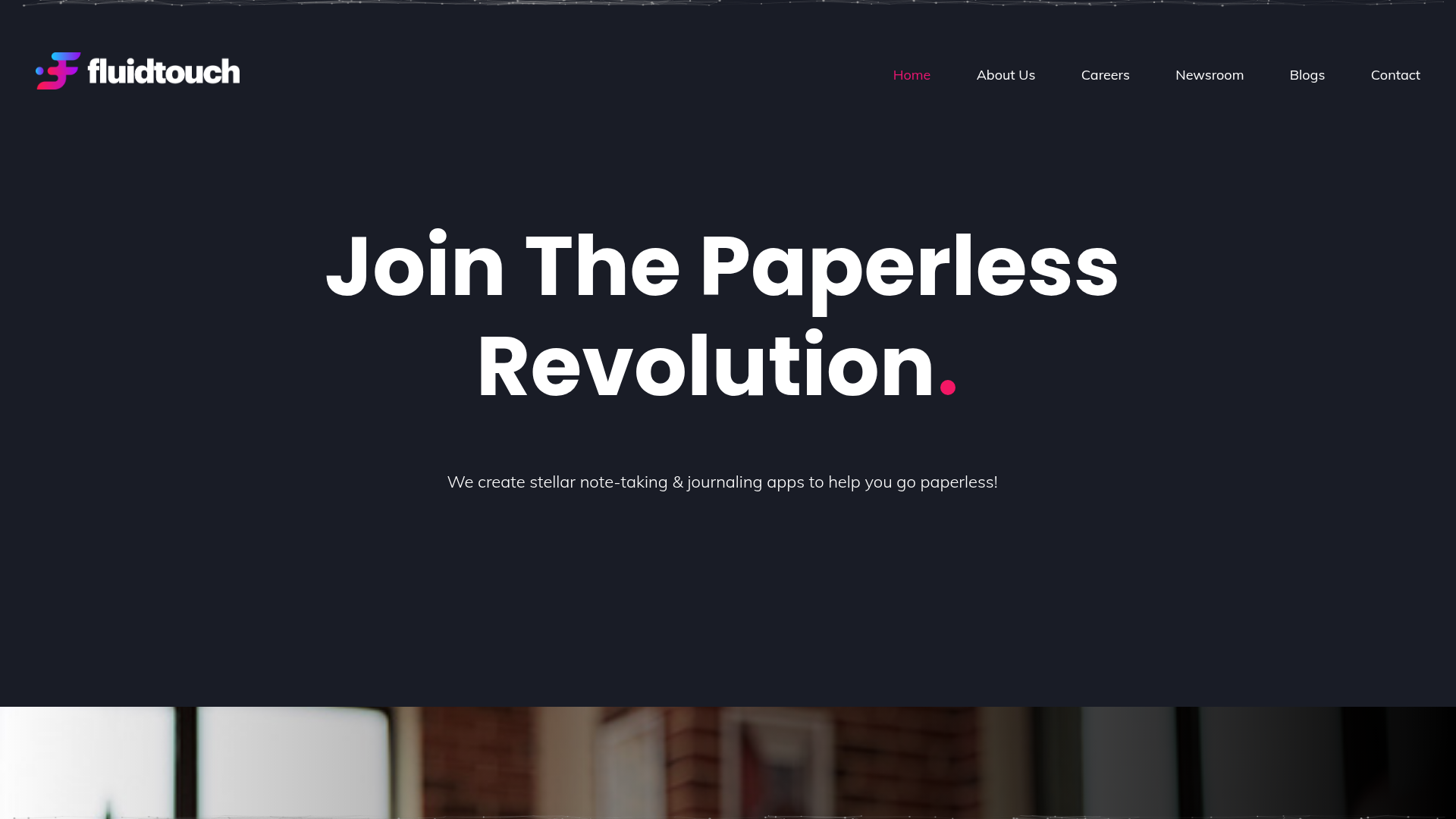
A dark-themed product portfolio featuring a particle hero background, animated counter statistics, award badge carousel, and a featured media/news grid.
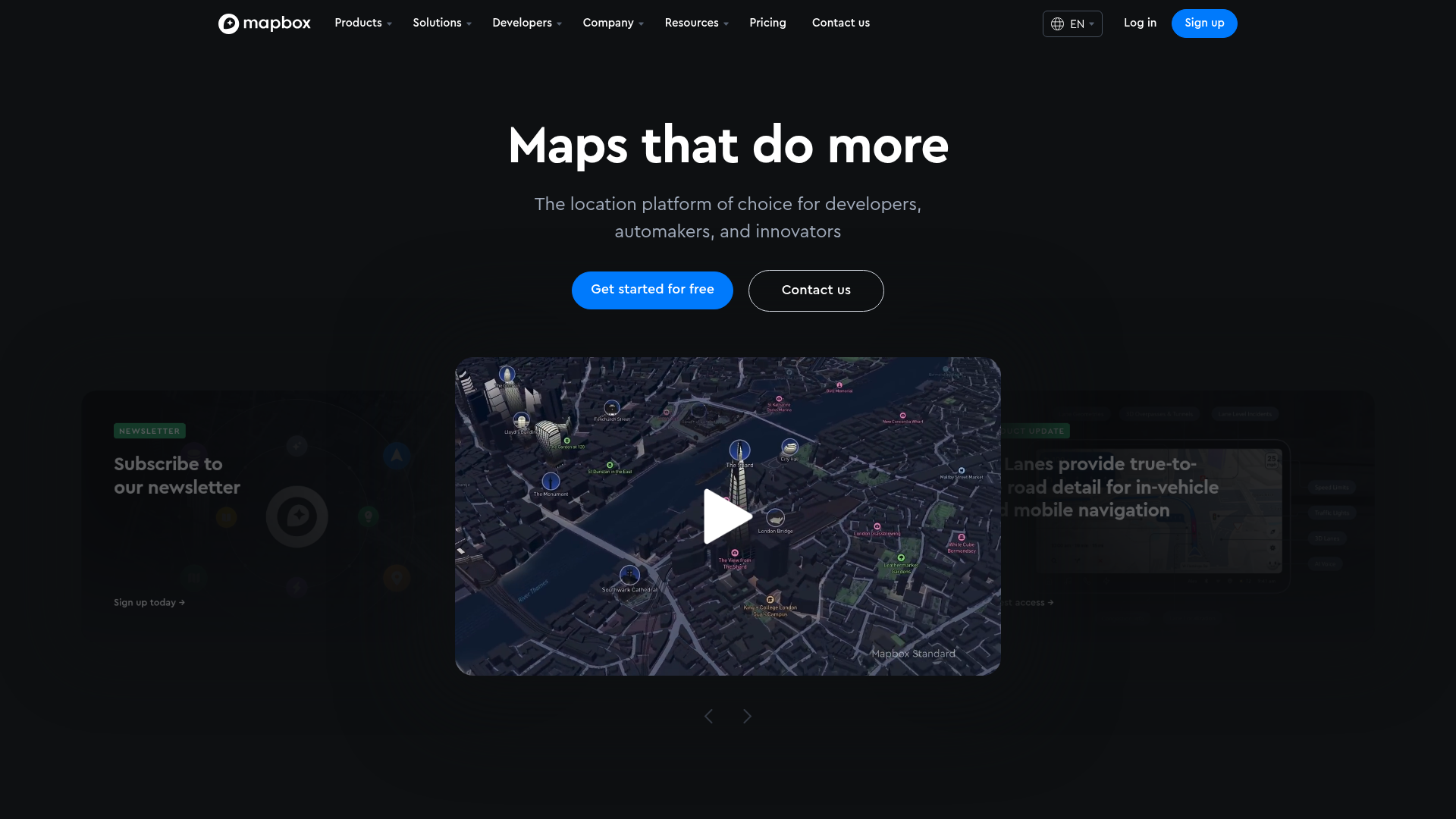
Mapbox SaaS Hero and Showcase Landing
A dark-themed landing page featuring a 3D-effect carousel, layered product highlight cards, tabbed customer stories, and a logo proof grid.
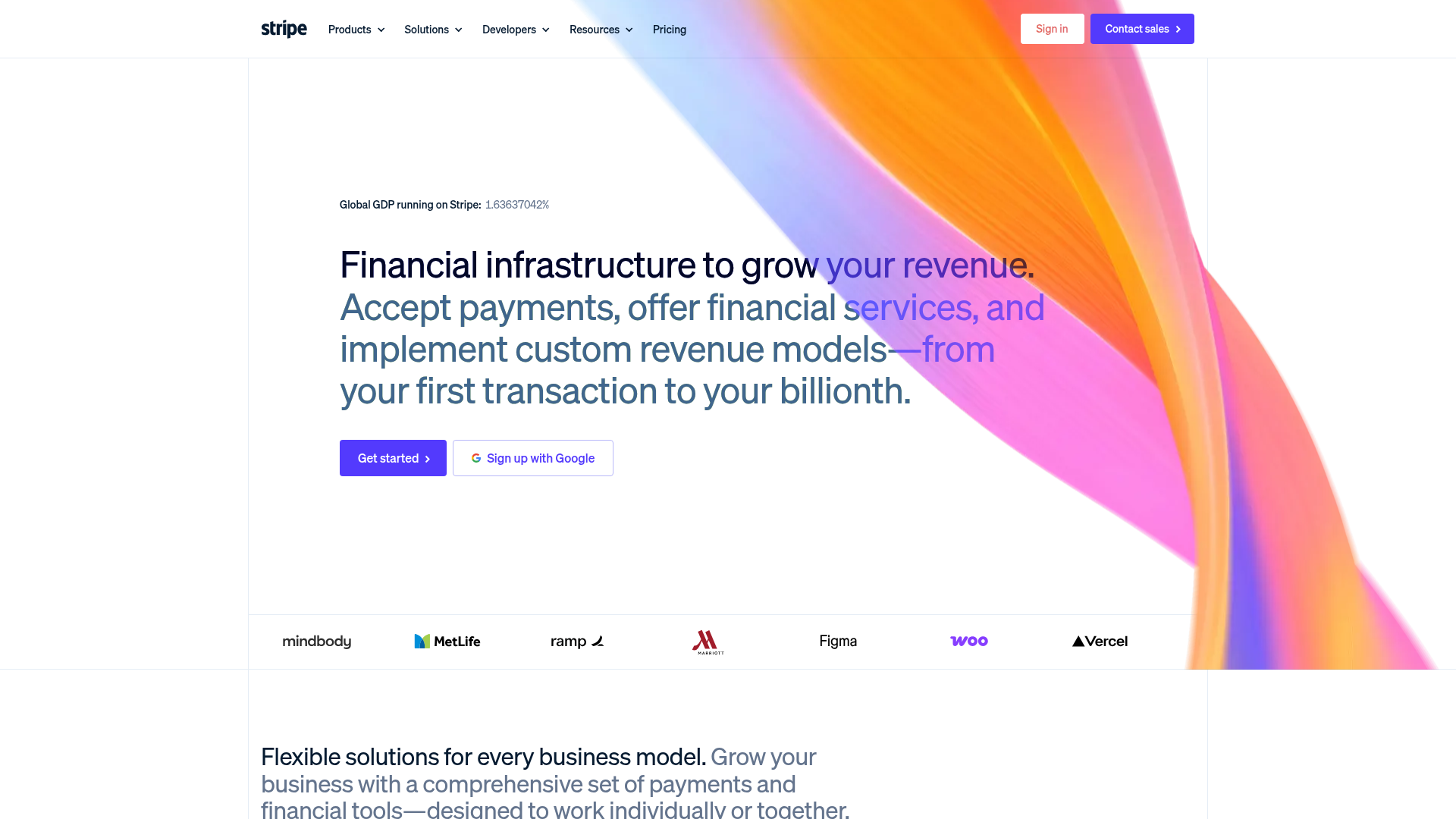
Stripe Modern SaaS Landing Page
A high-conversion landing page featuring a complex mesh-gradient hero, sticky navigation, and a horizontal logo wall for brand social proof.
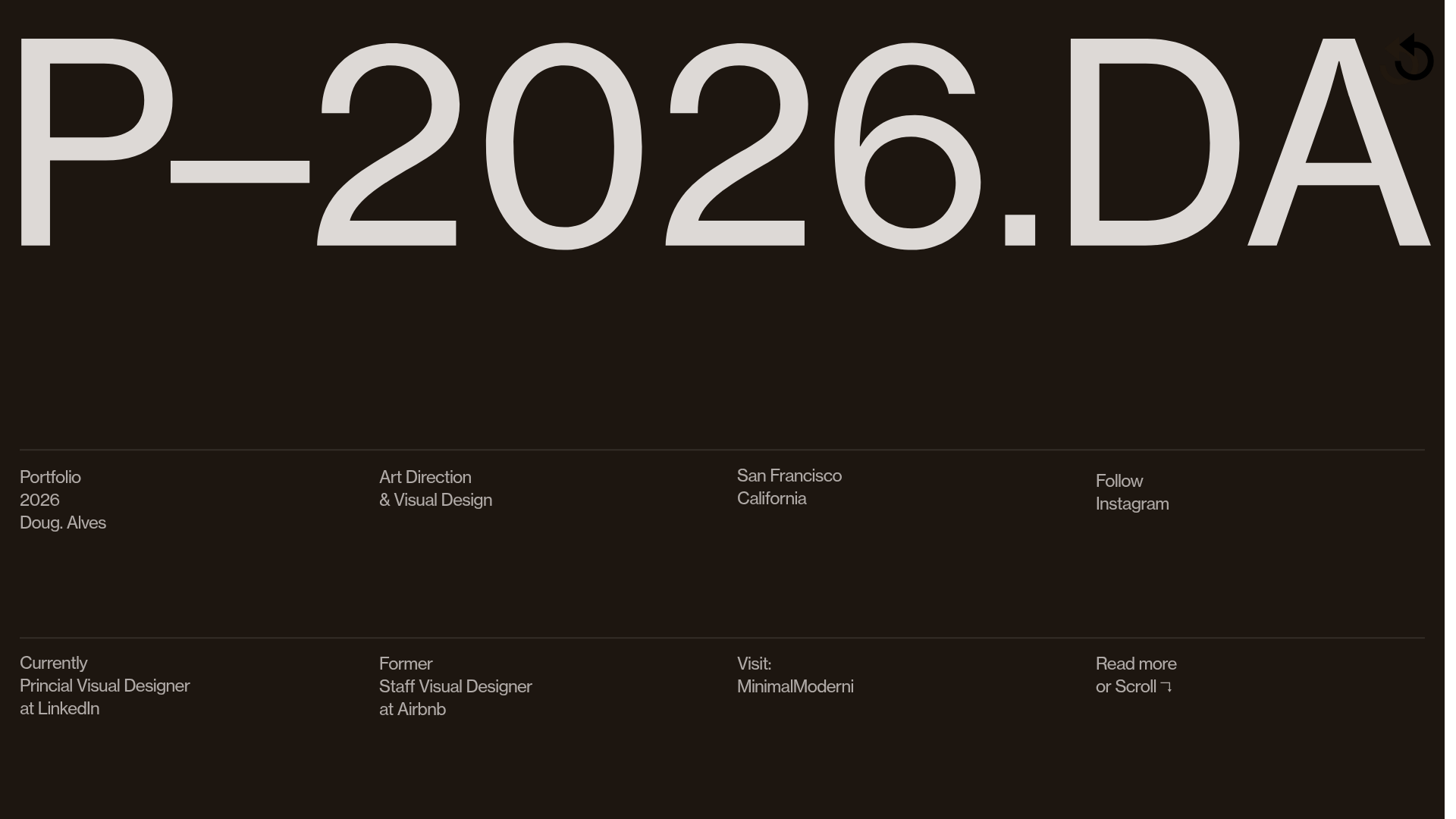
Doug Alves Visual Design Portfolio
A minimalist, high-contrast design portfolio featuring oversized typography, a sticky four-column grid footer, and a vertical scroll-triggered slide-show for project showcases.
