Egstad Minimalist Design Portfolio
A refined Nuxt.js portfolio featuring bold variable typography, interactive canvas elements, and a clean grid-based layout for showcasing design work.
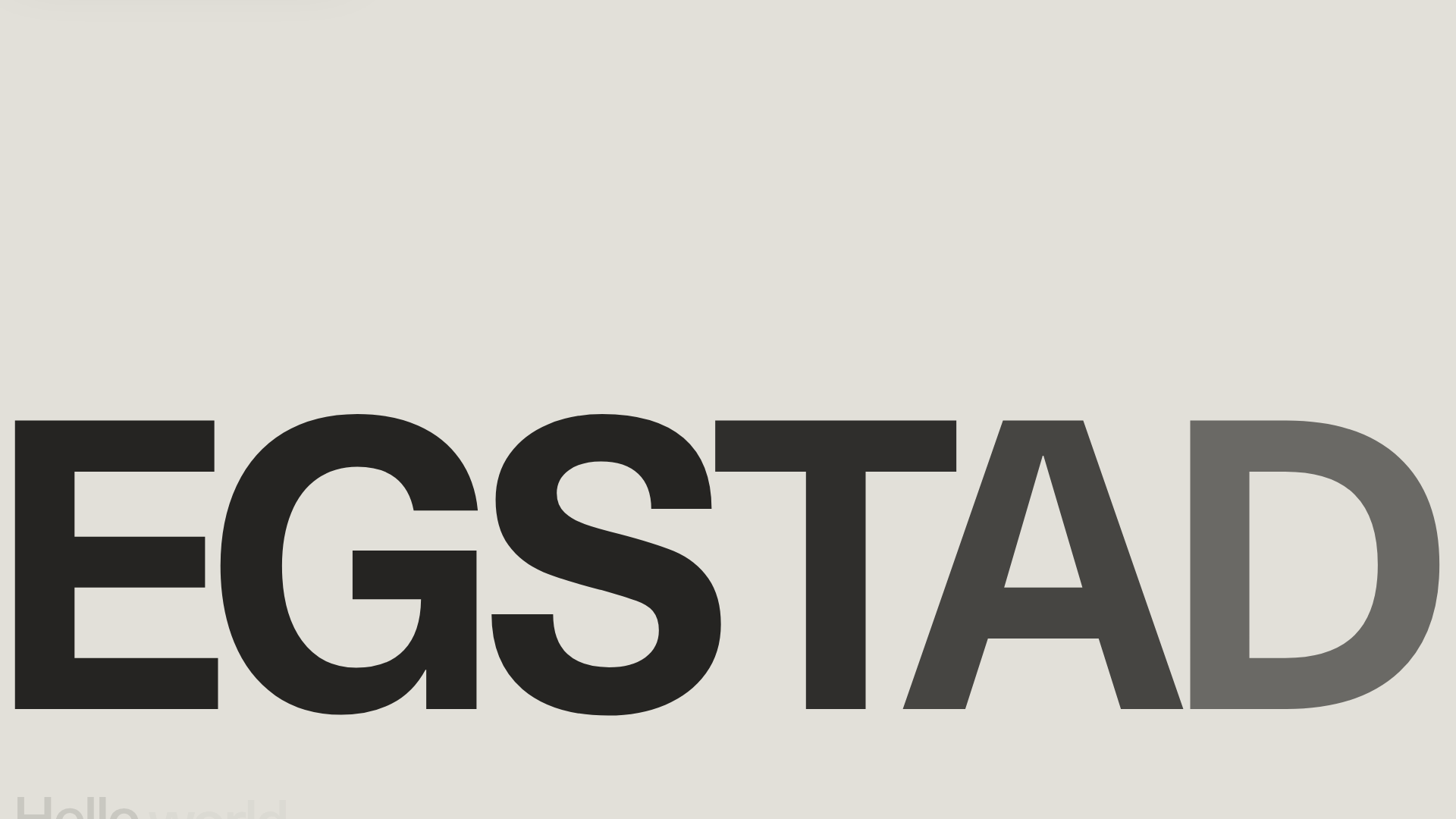
Overview
This project is a refined, minimalist portfolio designed for high-end creative professionals, leveraging Nuxt.js for a performant, component-driven experience. It stands out as a clone reference for its sophisticated use of CSS variables to manage themes and its integration of bold, oversized variable typography with interactive canvas elements.
Design System
- Color Palette & Visual Hierarchy: The site uses a high-contrast, yet warm, neutral palette defined via HSLA variables in the root container (
--background: hsla(47, 14%, 87%, 100%)). This creamy off-white background paired with a deep charcoal foreground (--foreground: hsla(40, 4%, 14%, 100%)) creates a premium, tactile feel. - Typography System: The design is anchored by "Metaphor," a custom variable sans-serif used at massive scales for branding (e.g., the "EGSTAD" hero text) to establish immediate visual impact. This is balanced by "System85," a monospace font used for metadata and technical details to provide a structured, architectural contrast.
- Structure & Flow: The layout follows a modular grid. It begins with a massive typographic hero, followed by a hidden-by-default grid of text blocks (
t-2class) containing personal history and professional experience, and ends with a colophon section dedicated to design and tech attribution. - Reusable Components: The
site-menudialog is a highly reusable filter utility, usingt-monolist items for category-based navigation. Theeggcartoncanvas container provides a template for integrating interactive, generative art into a standard layout flow. - Interaction & Motion: The UI utilizes specific interactive states such as
isCursorandisTouchclasses on the site root, suggesting custom cursor behavior and touch-optimized layout shifts. The presence of a<canvas>element indicates a background or foreground layer used for generative motion. - Implementation Clues: Built on Nuxt.js with Sanity.io as a headless CMS, the site uses scoped CSS (indicated by
data-v-attributes) and CSS variables for global styling, making it highly themeable by simply adjusting the HSLA values in the main wrapper.
Use Cases
- Who should clone this: Designers, developers, and agency owners who want a "low-chrome, high-impact" portfolio that focuses on typography and technical sophistication rather than image-heavy carousels.
- Remix Directions: Swap the primary variable font to change the entire brand personality; because the root uses CSS variables for colors, you can flip the theme to a dark mode or high-saturation brand palette by changing only three variable lines.
- Practical Adapting: Developers can reuse the navigation filter logic (
site-menu) for blog categories or product stores. The colophon section is a great pattern for open-source projects or creative labs to credit their stack. - Suggested Scope: A full-page clone is ideal for those wanting a cohesive, minimal single-page identity. For existing sites, the
site-menumodal and the HSL-based variable system are the most valuable components to extract.
Related Inspirations
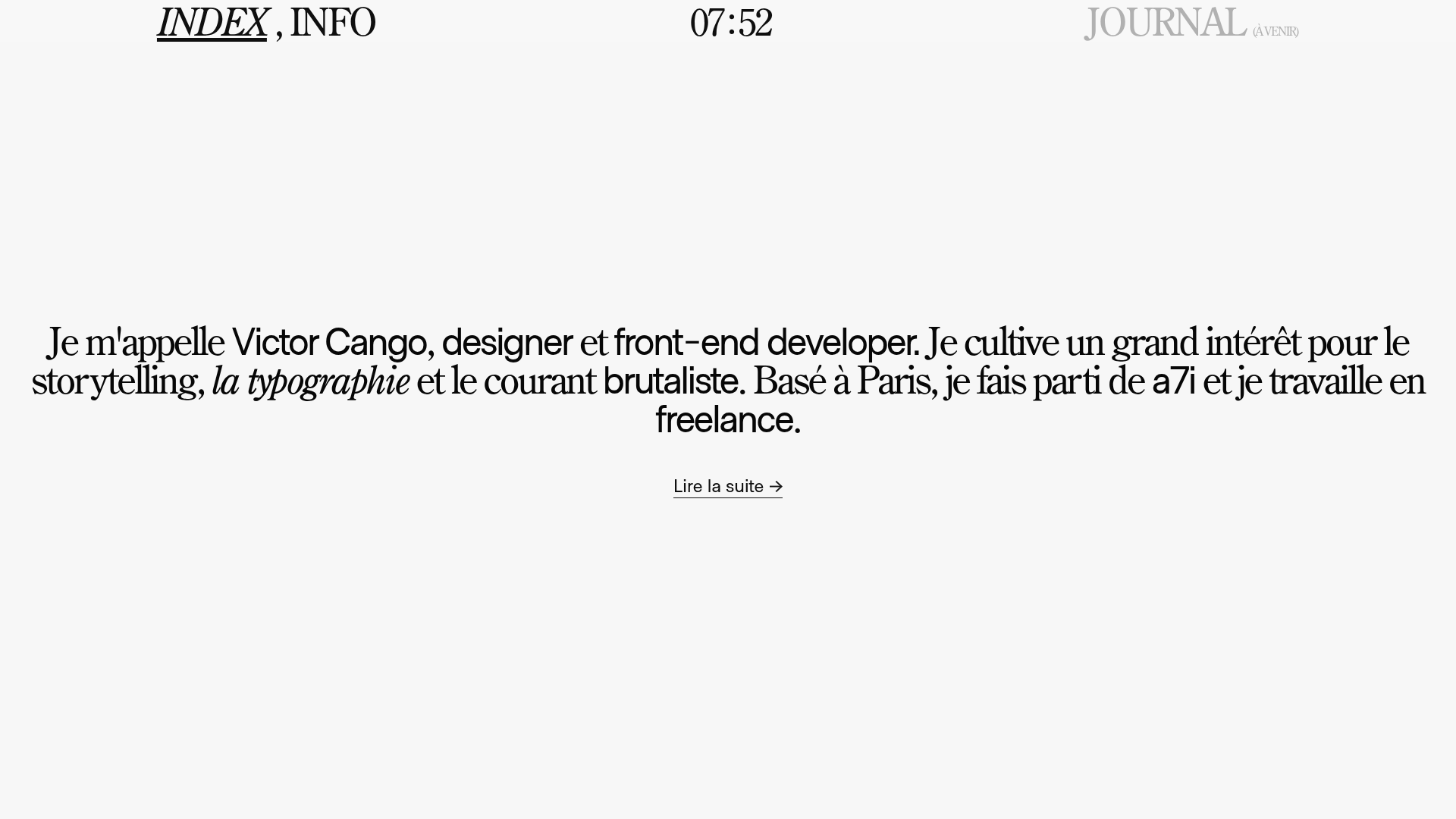
Victor Cango Brutalist Portfolio Hero
A minimalist brutalist hero section featuring a localized digital clock, typographic layout, and a full-screen canvas interaction with an embedded video texture.
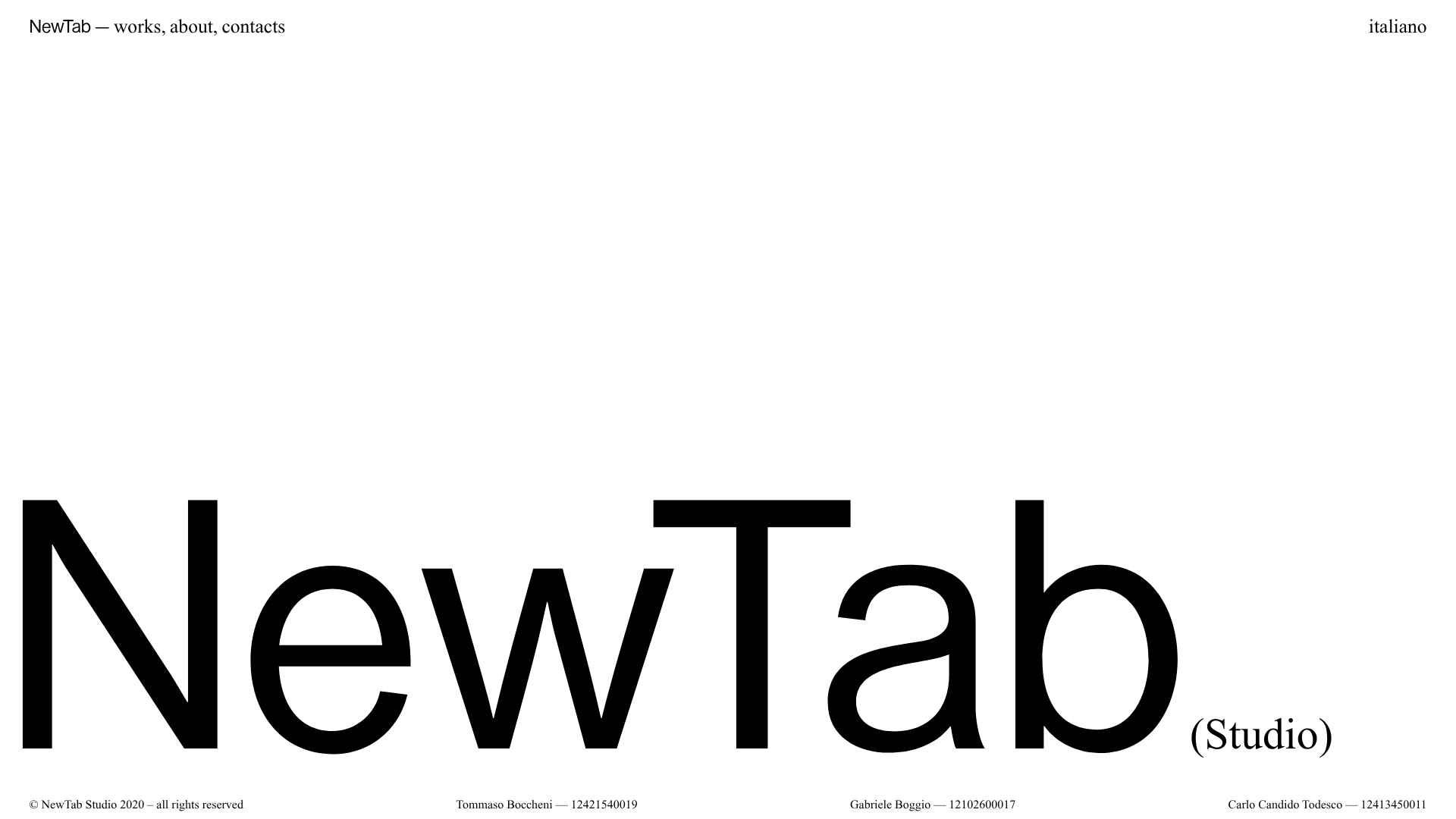
NewTab Studio Minimalist Portfolio Landing Page
A clean, typography-focused landing page featuring an oversized SVG/canvas hero title, a top-aligned navigation bar, and a minimalist footer layout.
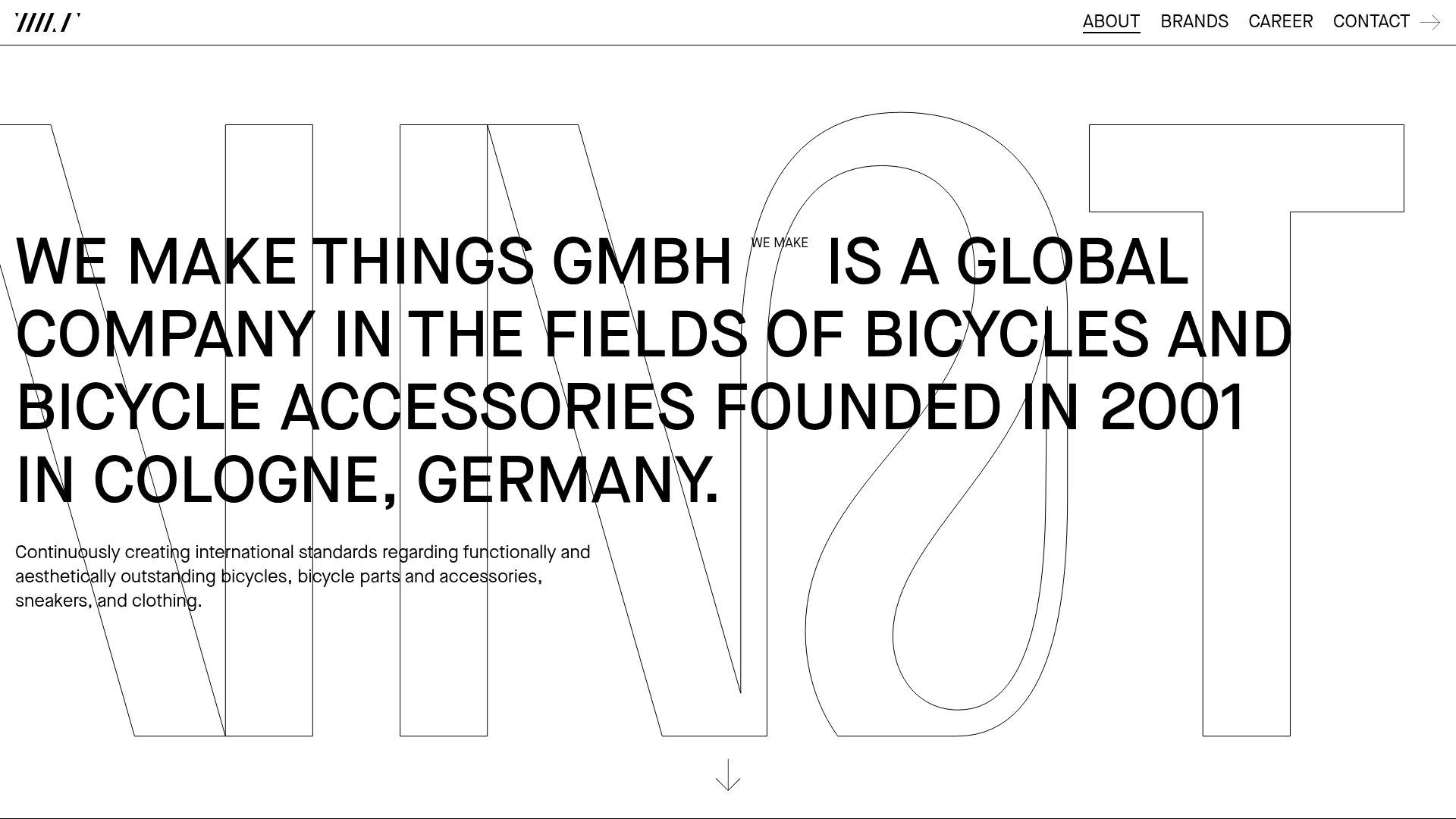
WE MAKE THINGS Corporate Portfolio
A minimalist corporate site featuring a bold typography-heavy hero section and an accordion-style brand list with integrated image galleries and external links.
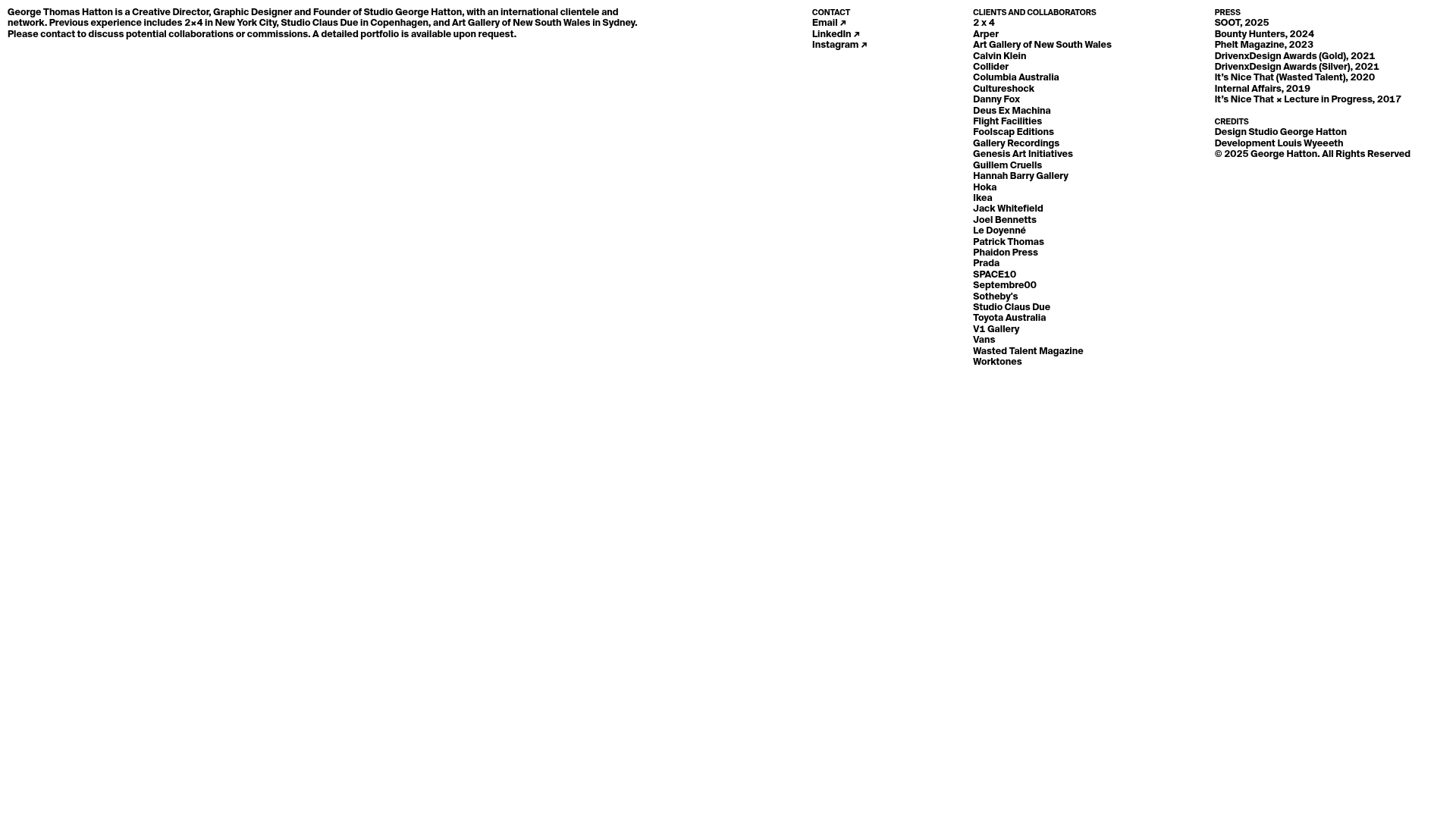
Minimal Text-Based Creative Director Portfolio
A clean, typography-focused landing page featuring a multi-column layout for bio, links, and client lists using simple CSS flex or grid structures.
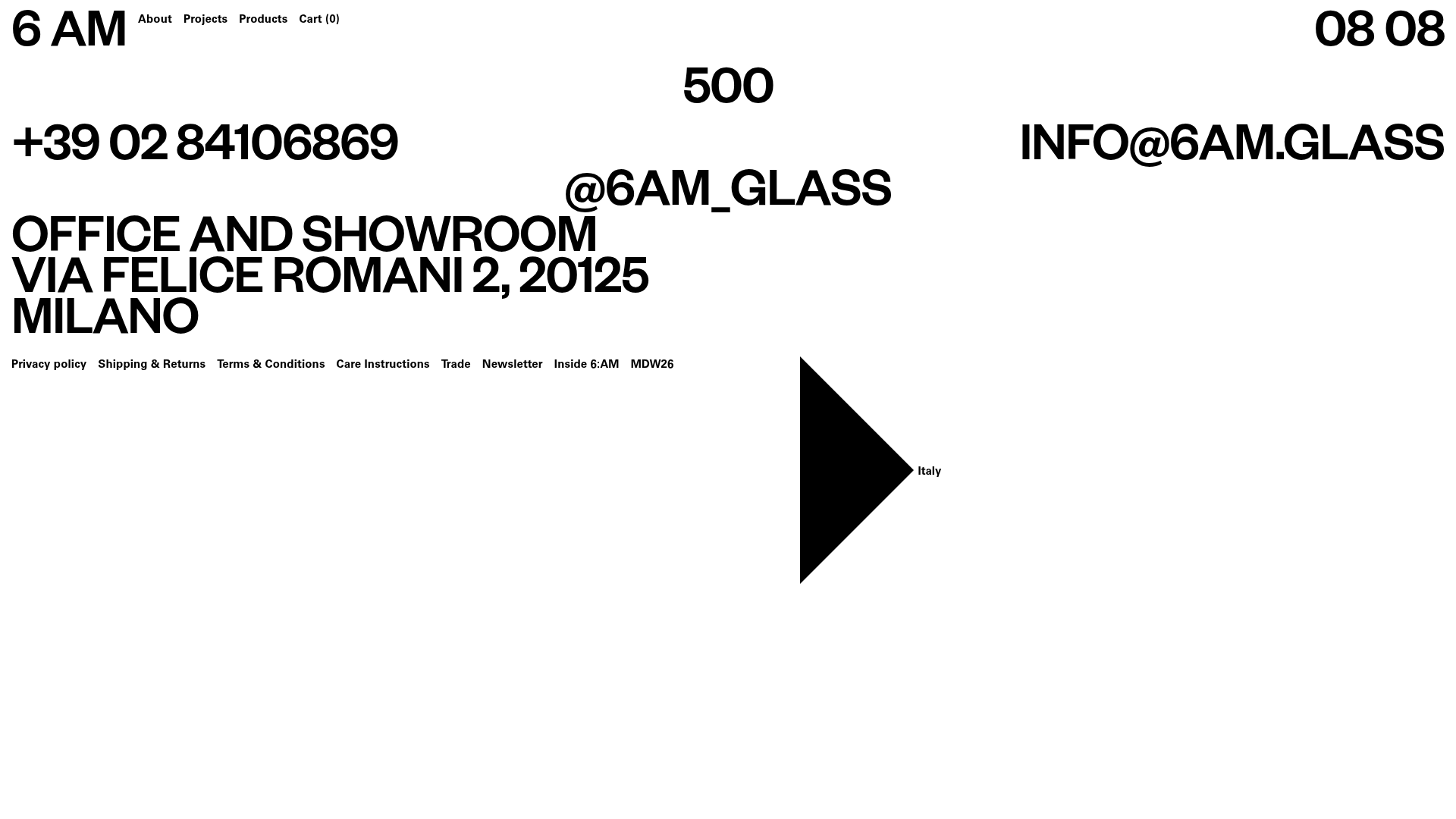
6:AM Glass Minimalist Server Error Page
A high-contrast, brutalist 500 error page featuring oversized typography, a fixed header with dynamic clock, and a structured footer contact layout.
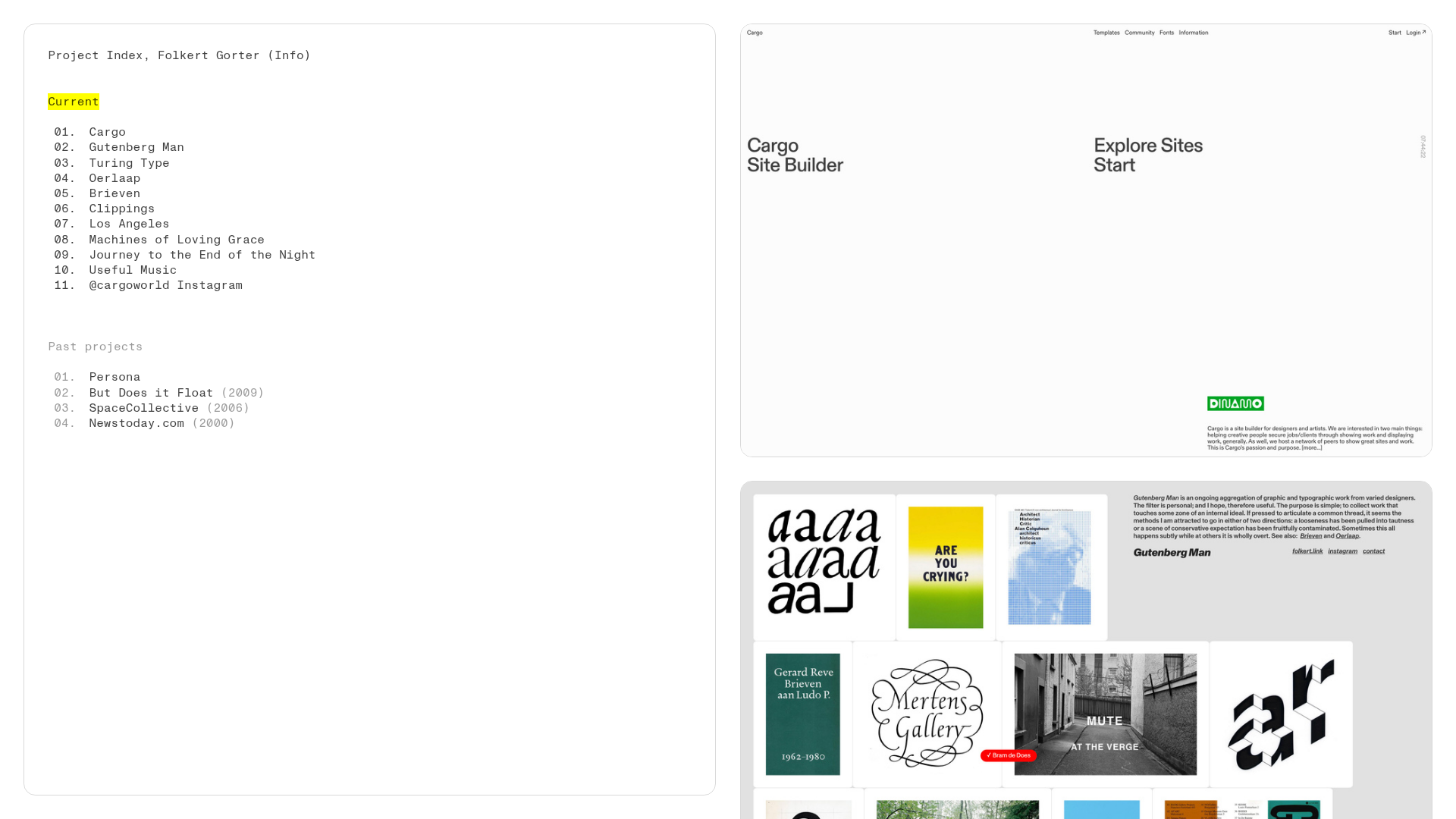
Folkert Gorter Minimalist Project Index
A clean, list-based portfolio layout featuring a pinned sidebar navigation, highlighted list items, and a vertical gallery grid of high-resolution graphic design work.
