Myrch Club Merch Portfolio Gallery
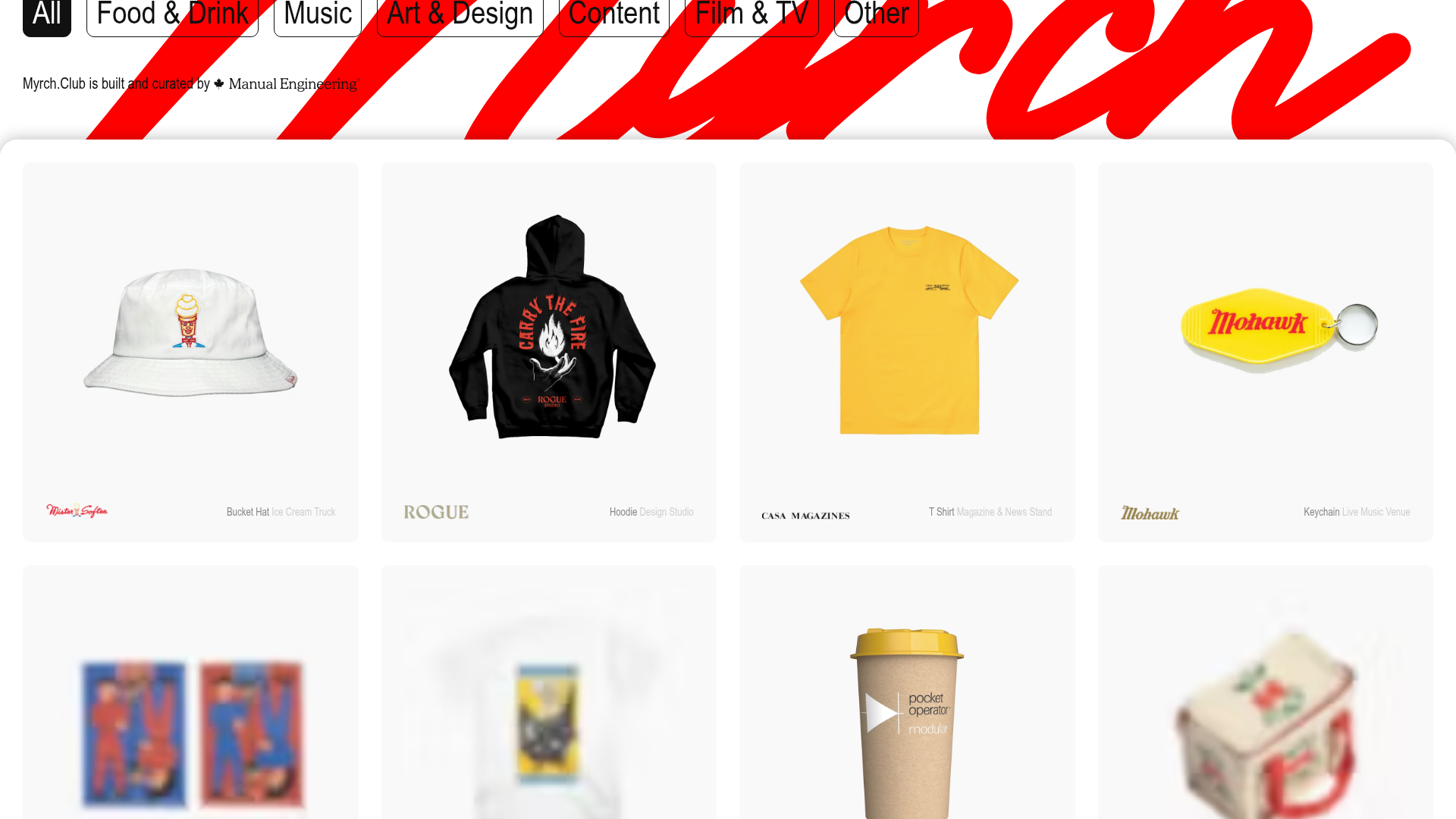
A minimalist product display grid featuring category filtering buttons, clean hover-state cards, and a large-scale decorative background typography header.
Overview
Myrch Club is a high-impact, minimalist portfolio gallery designed to showcase physical merchandise across multiple categories. Its aesthetic strength lies in the juxtaposition of aggressive, large-scale background typography with a ultra-clean, white-space-heavy product grid, making it an excellent reference for high-end boutique e-commerce or creative portfolios.
Design System
- Color Palette & Visual Hierarchy: The palette is dominated by high-contrast red-on-white and black-on-white. Visual hierarchy is established through a massive decorative header that sits behind the navigation, while product cards use a neutral light-gray background to make the merchandise stand out.
- Typography: The design utilizes a mix of bold, extended sans-serif for category filters and brand headers, contrasted with a smaller, secondary serif or monospaced font for product details like brand names and category labels (e.g., "Bucket Hat," "Ice Cream Truck").
- Page Structure: The layout follows a top-down flow: a fixed-style utility navigation with pill-shaped category filters ("All," "Food & Drink," etc.), a massive brand logo background, and a fluid four-column responsive grid container.
- Reusable Components:
- Category Pills: Simple border-outline buttons with a black-fill active state.
- Product Cards: Soft-rounded containers with centered product photography, dynamic logo placement at the bottom left, and metadata at the bottom right.
- The Hero Header: A layered section where text acts as a graphic element behind the navigation.
- Interactions: The grid suggests a hover-state focus where cards may lift or display additional metadata (as seen in the clear alignment of brand logos and product types at the base of each card).
- Implementation Clues: The HTML structure reveals a container-based layout utilizing flexbox or grid for the product tiles, with a focus on semantic grouping by category for filtering logic.
Use Cases
- Who should clone this: Independent designers, streetwear brands, or creative agencies looking for a "gallery first" approach to displaying physical goods or projects.
- Effective Remixes: This pattern works best for high-fidelity product photography, curated lookbooks, or digital asset storefronts where the brand identity needs to feel "loud" but the product display remains functional.
- Remix Directions:
- Brand Swap: Replace the red background typography with a brand-specific watermark or scrolling marquee.
- IA Adaptation: Transform the gallery into a blog list or a project portfolio by swapping merchandise images for case study thumbnails.
- Selective Reuse: Clone the header and navigation system for a landing page while using a more standard e-commerce layout for the body.
- Suggested Clone Scope: A full-page clone is recommended to maintain the specific balance between the oversized typography and the airy product grid, as the two elements rely on each other for visual tension.
Related Inspirations
Nothing Tech E-commerce Store Mockup
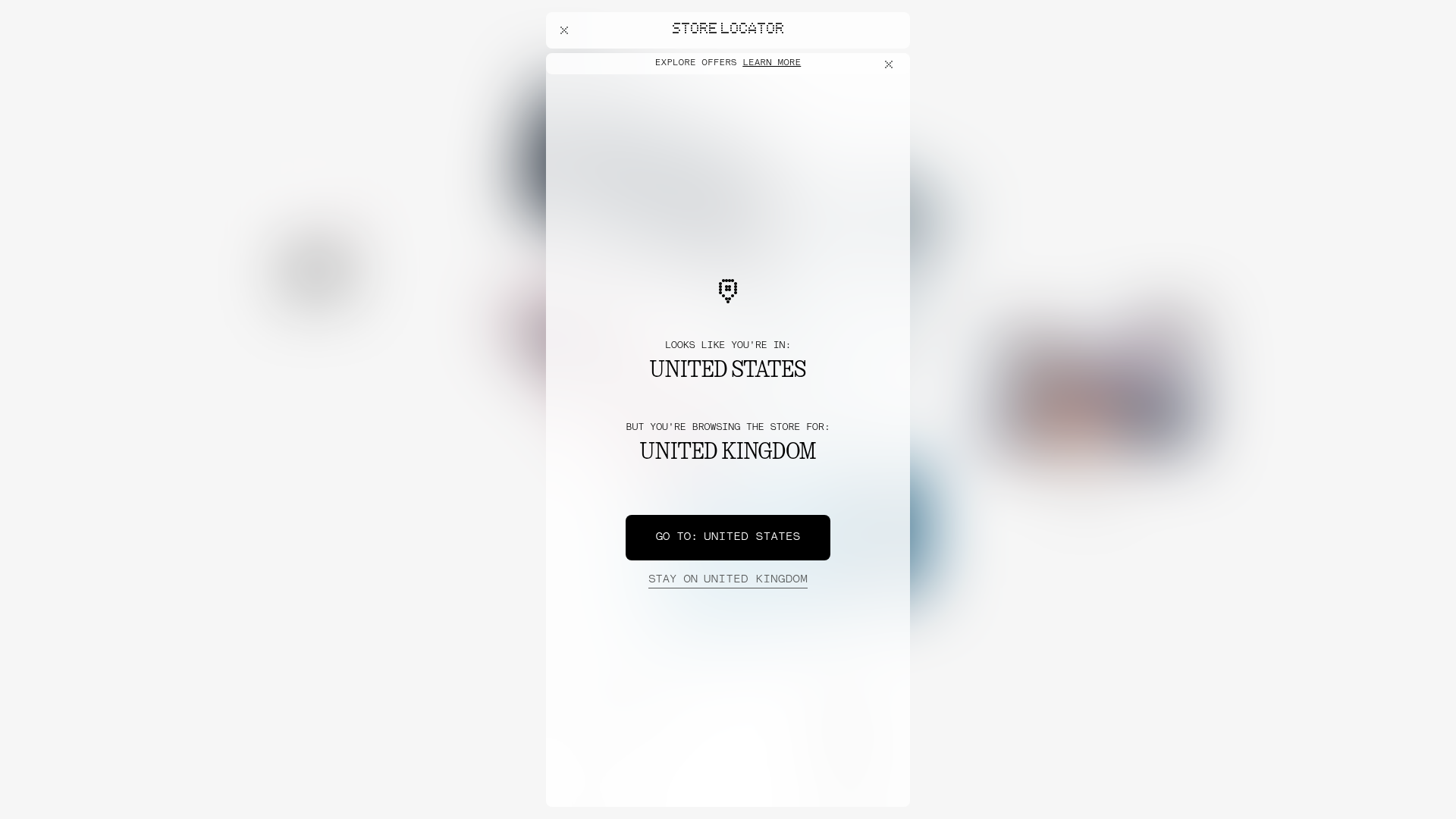
A minimalist bento-grid landing page featuring localized store modals, dot-matrix typography, and high-contrast frozen-glass UI components for product discovery.
Hai Fashion E-commerce Product Grid
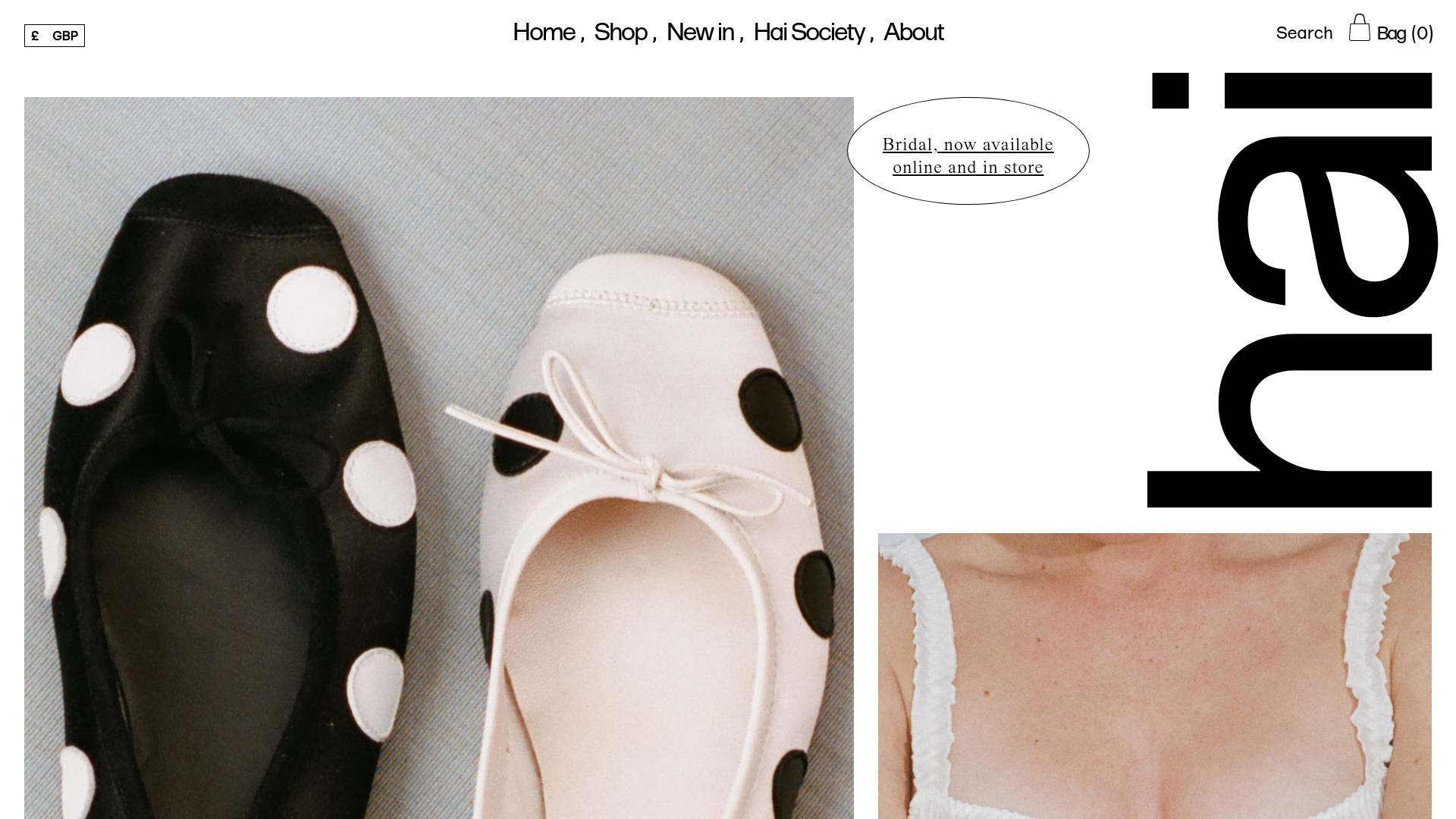
Minimalist boutique layout featuring asymmetrical product imagery, specialized typography, a floating circular call-to-action, and a clean grid for showcasing apparel and accessories.
BAGGU Minimalist E-commerce Hero Template
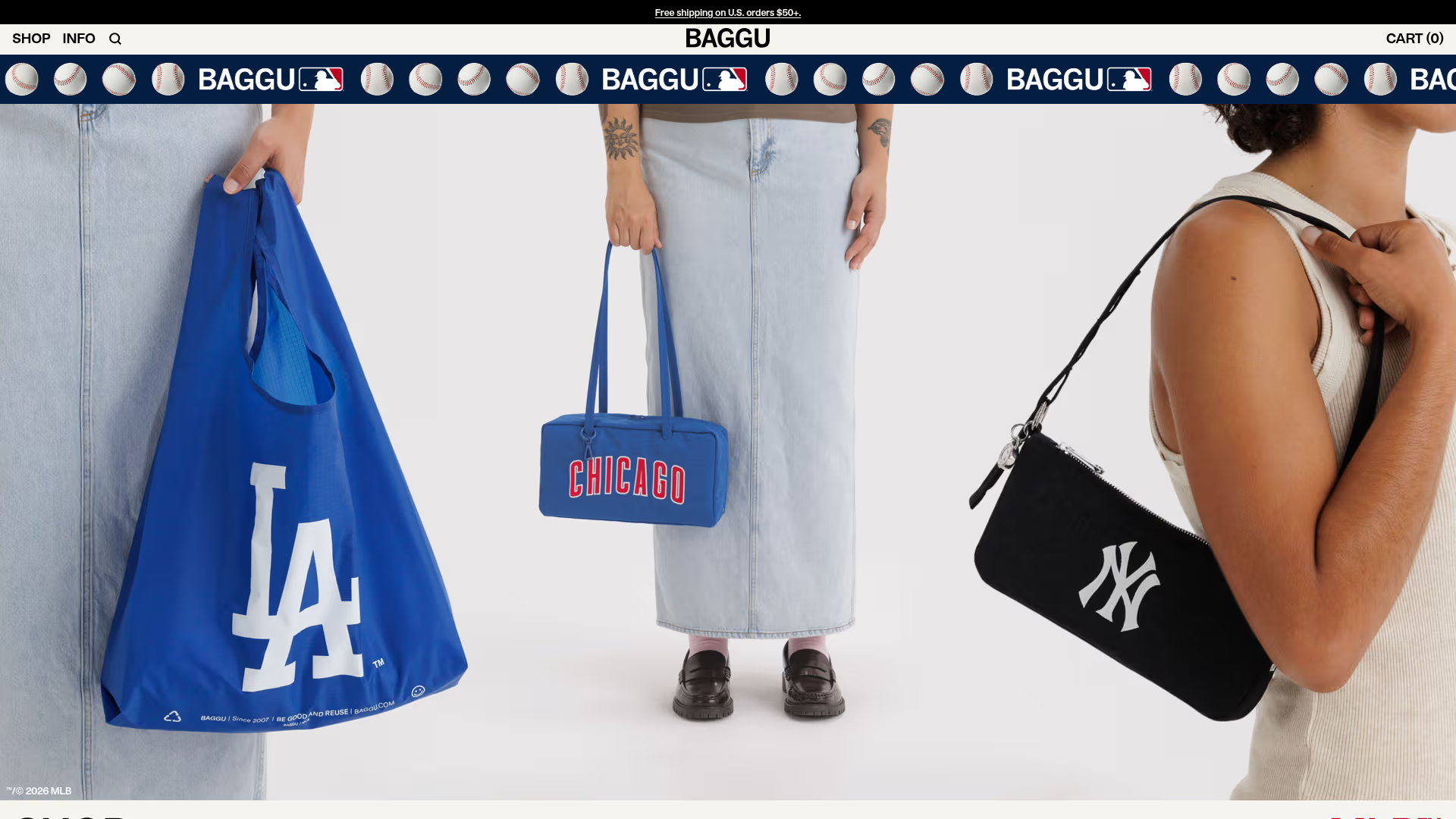
A clean retail landing page layout featuring a full-width high-impact hero section, a sticky integrated banner, and a minimalist navigation header optimized for product launches.
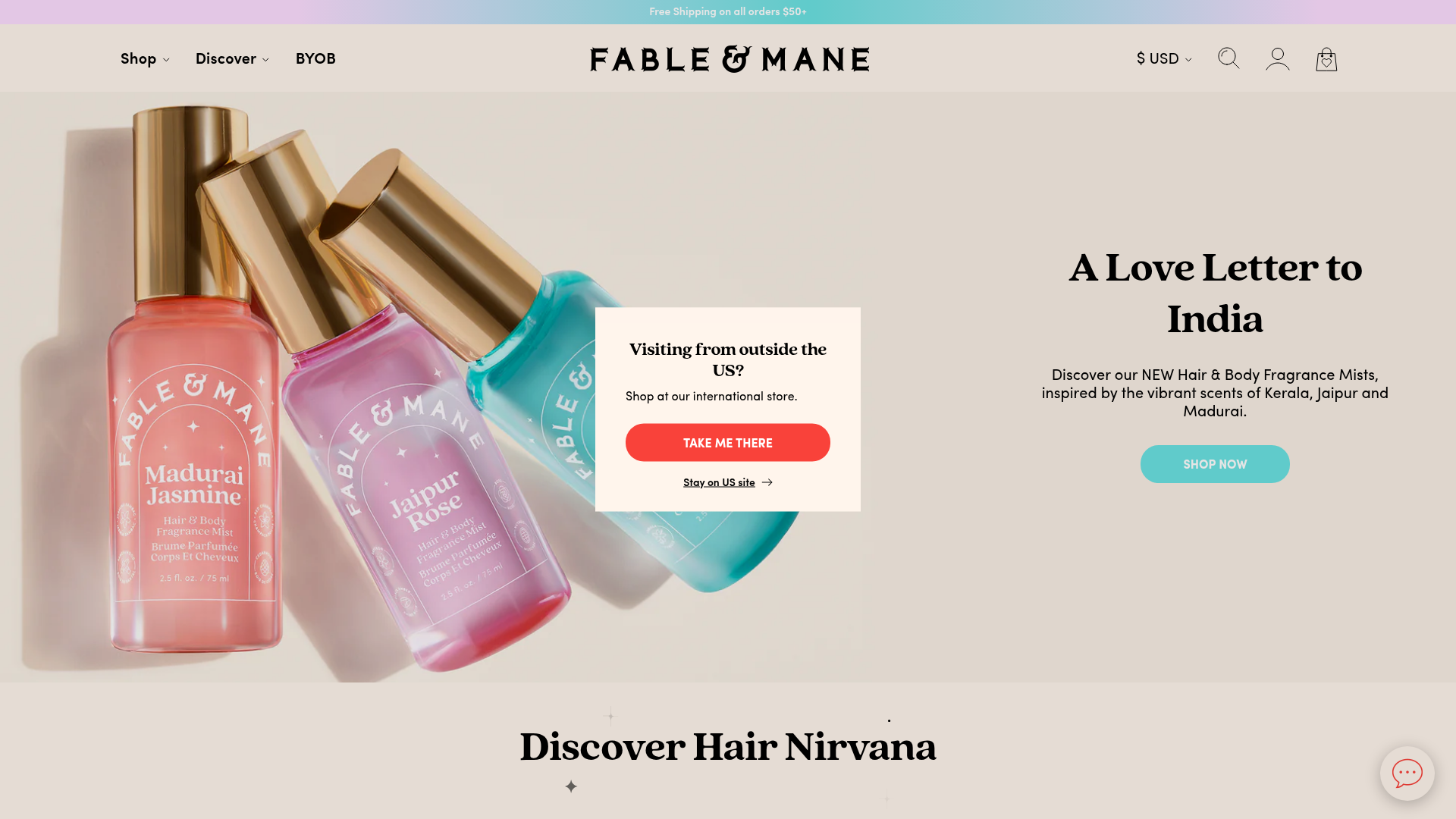
Fable & Mane Beauty Storefront
A clean e-commerce layout featuring a high-impact hero slider with localized entry popups and a product carousel with hover-triggered secondary images.
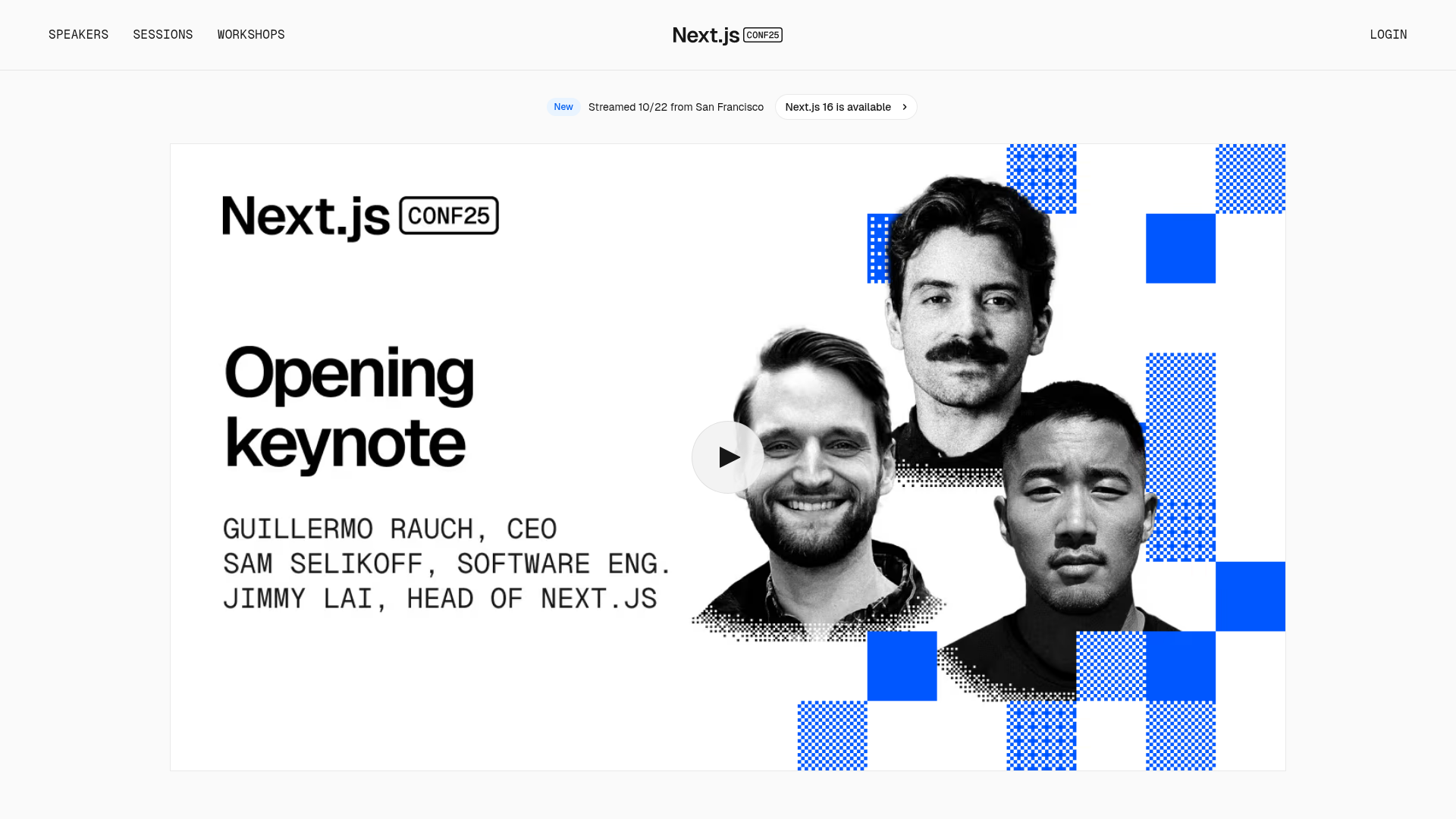
Next.js Conf Event Landing Page
A clean event landing page featuring a video hero section, minimal navigation headers, and a grid-based aesthetic for showcasing keynote speakers and sessions.
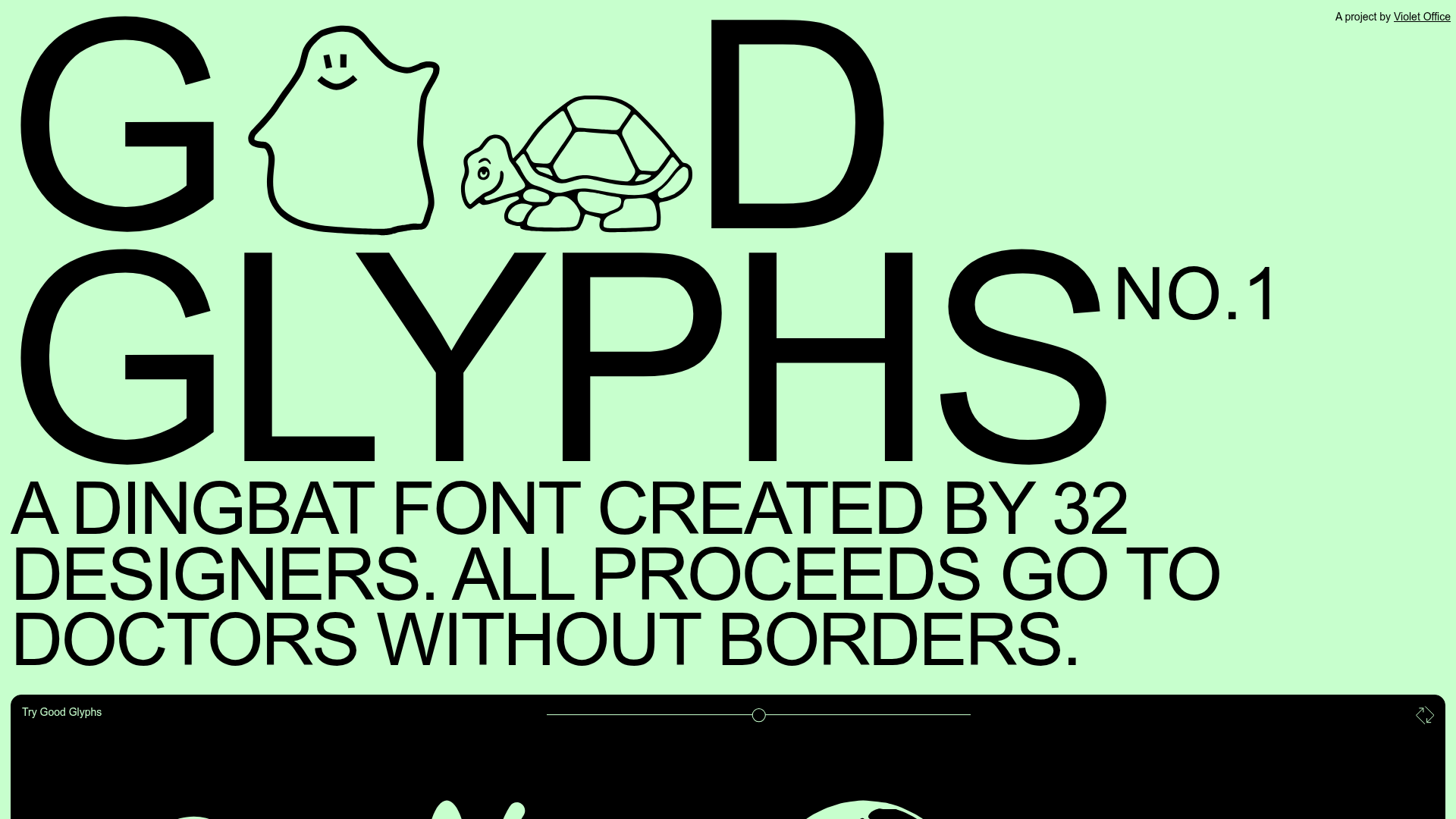
Good Glyphs Font Showcase Landing Page
A single-page layout featuring an interactive type tester, donation form with custom amount logic, and a contributor gallery using swiper-based glyph previews.
