IAD Lab Interactive Event Landing
A dark-themed event page featuring a Three.js WebGL hero, Svelte-powered scroll animations, a structured program timeline, and a past-edition archive list.
Overview
This is a highly immersive, interactive event landing page for IAD Lab, designed to showcase interaction design expertise through a dark-themed, motion-rich experience. It is a premier clone reference for developers wanting to integrate Three.js WebGL backgrounds with Svelte-powered reactive UI and scroll-triggered animations.
Design System
- Color Palette & Visual Hierarchy: A monochromatic deep-gray/black background allows the white typography and translucent UI elements to lead the visual hierarchy. Grayscale gradients and blurs are used extensively for depth and focus transitions.
- Typography: The site uses a clean, sans-serif font system with a focus on large-scale headlines and character-level reveal animations (e.g., the "Imagine" and "14Nov25" headers). Emphasis is created through font weight and high-contrast letter spacing.
- Page Structure: The layout follows a linear narrative: a full-screen WebGL hero -> animated date/theme reveal -> detailed event description -> vertical timeline program -> ticket pricing blocks -> logistical info -> archival list.
- Reusable Components:
ProgramEntry: A timeline item featuring room tags, time indicators, and expanding content areas.Tickets__item: A minimalist pricing card with clear CTAs.Archive__item: A list-based navigation component for historical links with interactive hover states.TitleSection: A fixed-position, scroll-reactive navigation/status element that transitions text as the user moves through sections.
- Interaction & Motion: The core experience is driven by "scroll-jacking" and parallax effects. Elements use CSS
filter: blur()andopacitytransitions triggered by scroll position. Letter-by-letter reveal animations on headings provide a high-end, cinematic feel. - Implementation Clues: Built using Svelte (indicated by
svelte-scoped classes) and Three.js r149 for the 3D canvas background. The DOM structure uses ARIA attributes (aria-hidden) to handle accessibility for animated text.
Use Cases
- Who should clone this: Creative studios, design conferences, and tech product launches looking for a high-fidelity, "less-is-more" landing page.
- Remix Directions: Adapt the Three.js background to a different particle system or 3D model while keeping the robust scroll-linked UI; swap the event timeline for a product feature list; or use the structured archival list for a portfolio index.
- Recommended Scope: The
ProgramEntrytimeline and theTitleSectiontext-reveal logic are the most valuable components to clone individually. For a full-page clone, it is ideal for single-day events or high-impact storytelling sites.
Related Inspirations
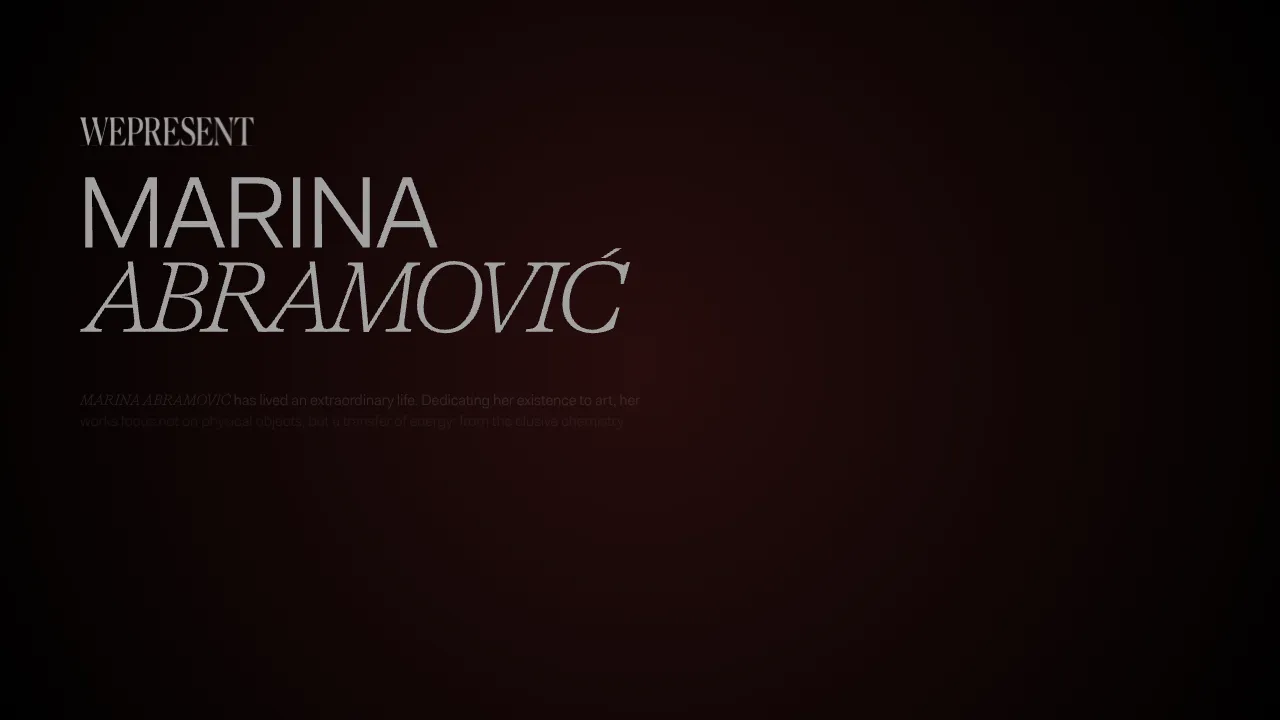
Marina Abramović Immersive Storytelling Gallery
A high-end multimedia experience featuring a 3D canvas background, custom cursor effects, interactive audio controls, and an overlay-based menu for immersive digital narratives.
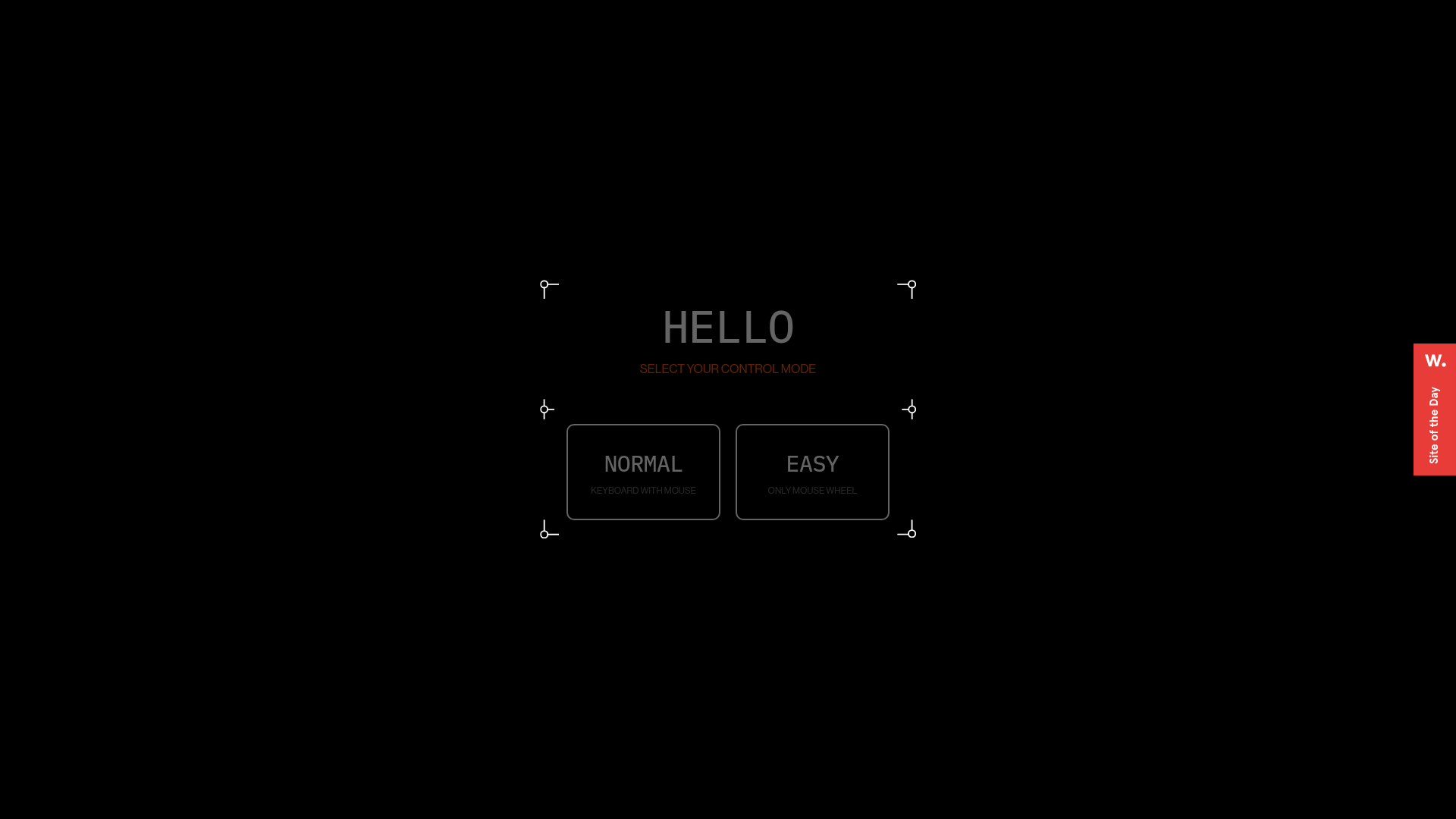
Digital Showroom Control Mode Selection
A futuristic UI featuring a modal with framed corners, grid backgrounds, and custom buttons for selecting navigation preferences like keyboard or mouse controls.
Wayfinder Minimalist Loading Screen
A clean, dark-themed loading state featuring a centered CSS logo animation and subtle typography for use in high-contrast immersive web experiences.

The Sea We Breathe Immersive Experience
An interactive WebGL-based storytelling layout featuring a data-rich HUD overlay, custom animated audio controls, and a full-screen video canvas for cinematic narrative experiences.
Gemini Immersive WebGL Motion Showcase
Features a cinematic Three.js WebGL canvas stage with interactive navigation buttons, a hold-to-interact pattern, and data-driven terminal-style UI overlays.
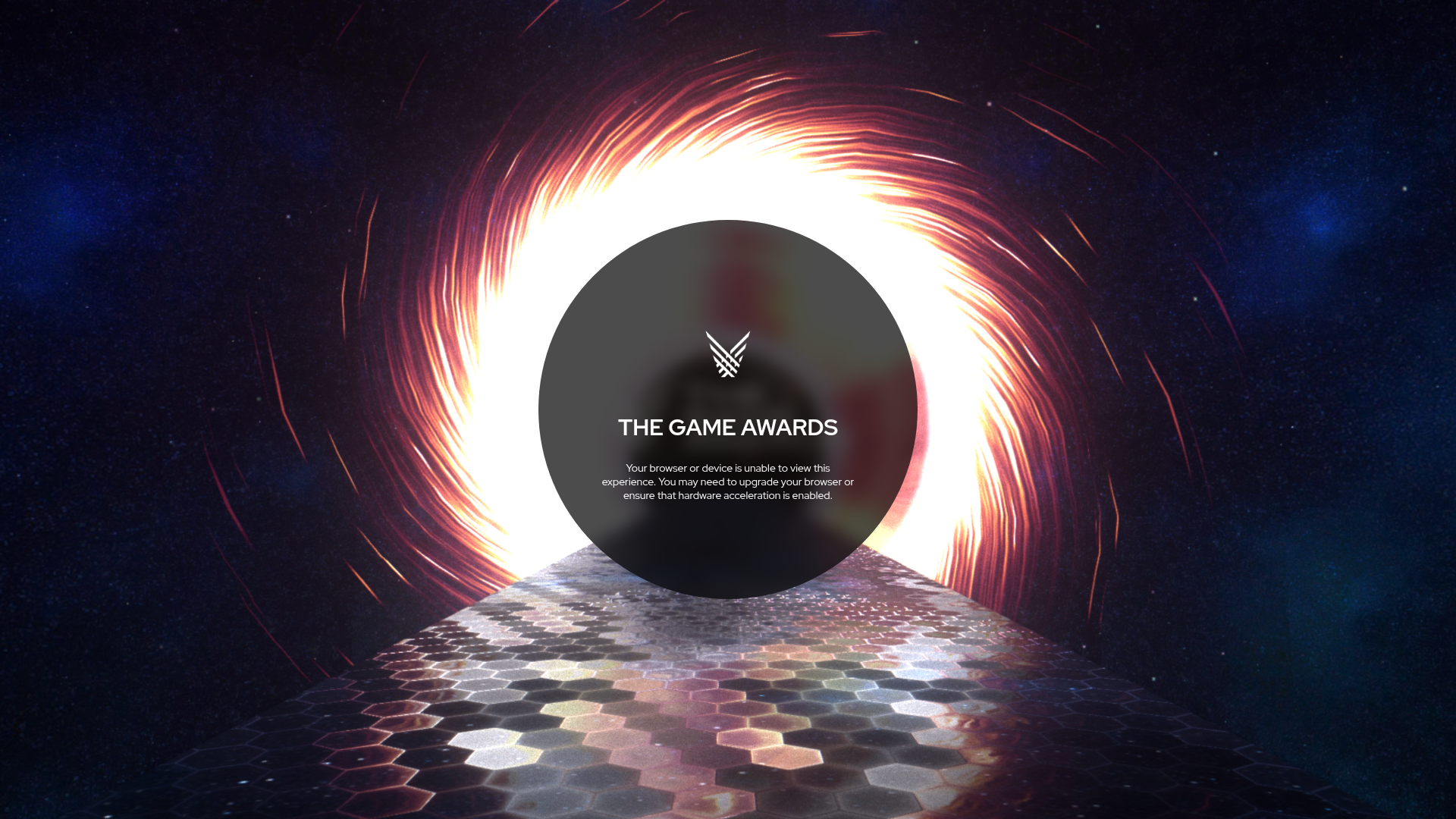
The Game Awards WebGL Experience
A high-end multimedia site featuring a WebGL canvas background with space themes, hexagon-tiled flooring, and a centered circular UI for status messaging.
