The Game Awards WebGL Experience
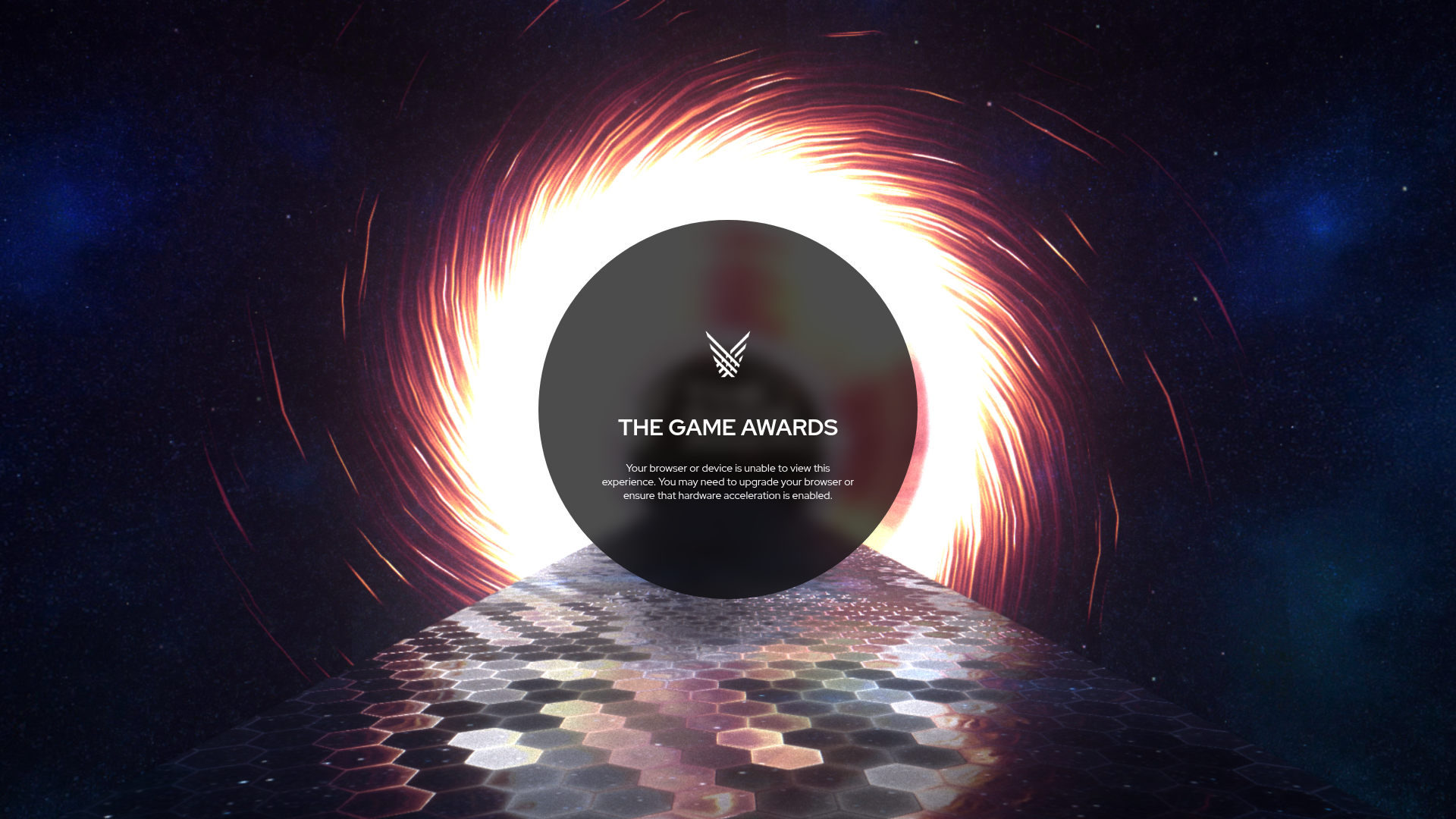
A high-end multimedia site featuring a WebGL canvas background with space themes, hexagon-tiled flooring, and a centered circular UI for status messaging.
Overview
This site is a high-end multimedia landing page designed to showcase an immersive WebGL environment for global events. It serves as an excellent reference for builders wanting to combine cinematic 3D backgrounds with a clean, functional 2D UI overlay for error handling, loading states, or event information.
Design System
- Color Palette & Visual Hierarchy: The system uses a deep space-themed palette consisting of blacks, navy blues, and vibrant orange/white light bursts from a central vortex. The hierarchy is centered; a high-contrast circular modal (rgba(0, 0, 0, 0.7)) sits atop the scene to ensure readability against the complex background.
- Typography System: The design utilizes a clean, sans-serif font family. The title "THE GAME AWARDS" is set in a bold, uppercase style (~3rem) for maximum impact, while body text is smaller (~1.4rem) and centered to maintain visual balance.
- Page Structure: The layout follows a full-screen, absolute-positioning model. The base layer is a
<canvas>element for WebGL rendering, followed by aUIControllerfor interactive elements and aFallbackViewoverlay that triggers during loading or compatibility issues. - Reusable Components: The primary component is the 'Circular Status Modal.' It uses
backdrop-filter: blur(1rem)andborder-radius: 50%to create a modern, glass-morphism effect. These properties, combined with the centered flexbox wrapper, make it a robust pattern for splash screens or alerts. - Interaction & Motion: The HTML indicates transiton-heavy animation patterns, specifically using
cubic-beziertiming functions for scaling effects (scaleY) and opacity fades. This suggests a smooth, premium feel for entry and exit transitions. - Implementation Clues: The structure uses a container-based layout with clear separation between the
Stage(3D scene) and theUIController(2D interface). The use of inline styles for dimensions and flexbox suggests a highly customized layout rather than a standard CSS framework.
Use Cases
- Who should clone this: Developers building event landing pages, movie promos, or crypto/NFT projects that require a "wow-factor" 3D environment with simple informational overlays.
- Remixing effectively: Swap the space vortex background for a product render or a 3D architectural model while keeping the circular UI for navigational links or feature descriptions.
- Remix directions: Adapt the
FallbackViewinto a full-page navigation menu or a 'loading complete' gate. The hexagonal flooring in the background can be remixed as a standalone grid system for data visualization or hero sections. - Clone scope: A quick section clone of the circular modal and its backdrop-blur effects is ideal for status alerts. A full-page clone is best for those looking to implement high-performance WebGL experiences with a dedicated UI layer.
Related Inspirations
Gemini Immersive WebGL Motion Showcase
Features a cinematic Three.js WebGL canvas stage with interactive navigation buttons, a hold-to-interact pattern, and data-driven terminal-style UI overlays.
Marina Abramović Immersive Storytelling Gallery
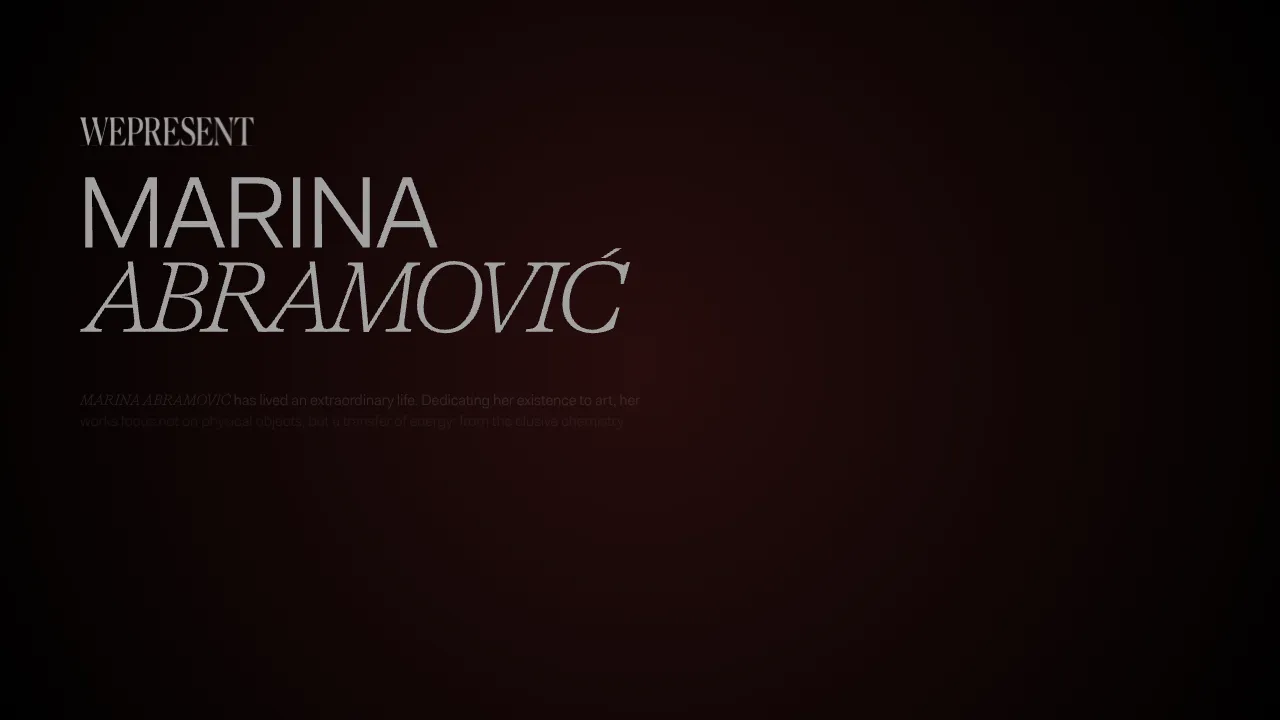
A high-end multimedia experience featuring a 3D canvas background, custom cursor effects, interactive audio controls, and an overlay-based menu for immersive digital narratives.
Digital Showroom Control Mode Selection
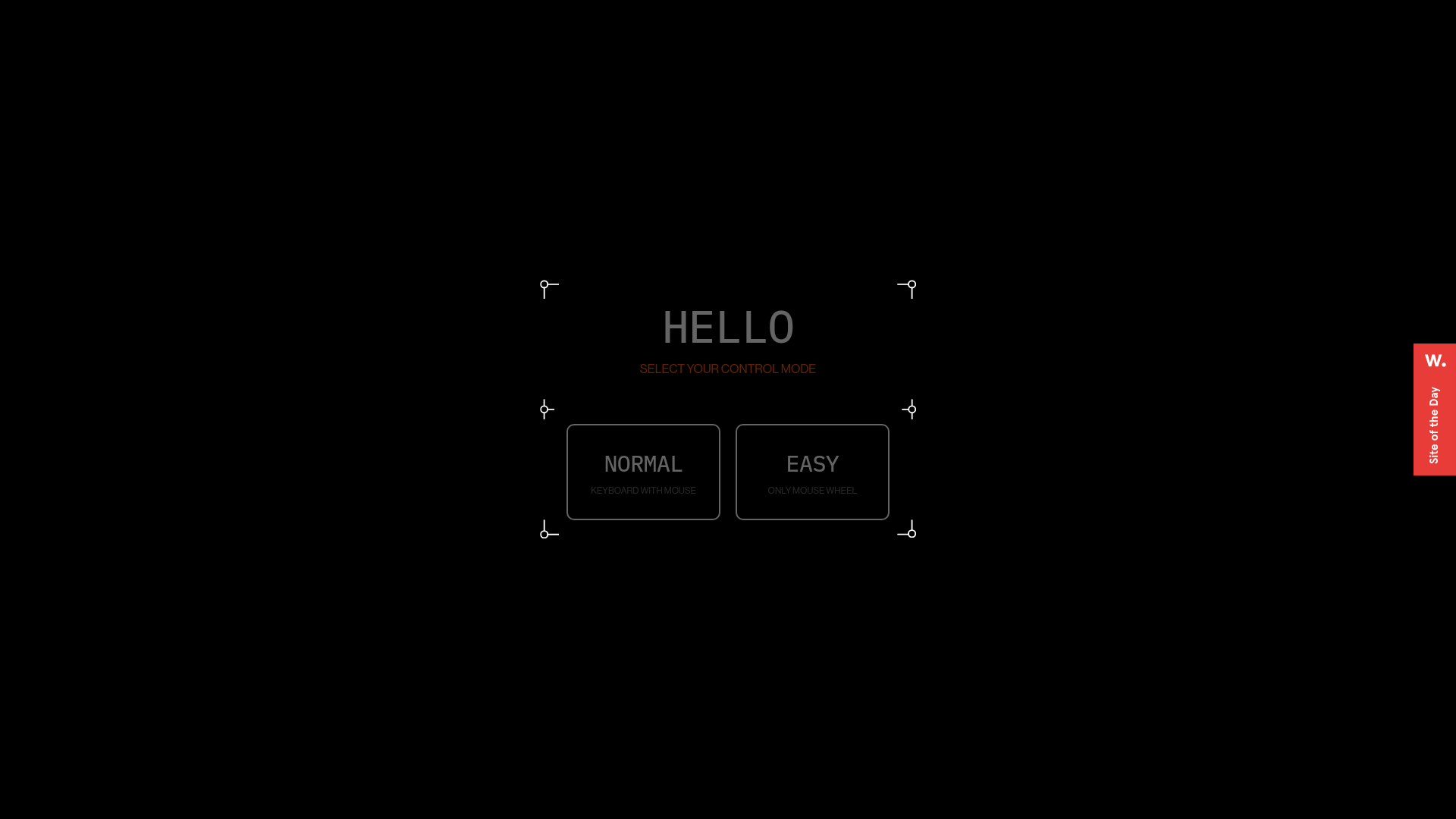
A futuristic UI featuring a modal with framed corners, grid backgrounds, and custom buttons for selecting navigation preferences like keyboard or mouse controls.

Bruno Simon 3D Interactive Portfolio
A Three.js and WebGPU driven 3D game environment featuring interactive navigation, custom touch controls, and a canvas-based layout for immersive web experiences.

The Sea We Breathe Immersive Experience
An interactive WebGL-based storytelling layout featuring a data-rich HUD overlay, custom animated audio controls, and a full-screen video canvas for cinematic narrative experiences.

IAD Lab Interactive Event Landing
A dark-themed event page featuring a Three.js WebGL hero, Svelte-powered scroll animations, a structured program timeline, and a past-edition archive list.
