Jonnie Hallman Design Engineer Portfolio
A minimalist portfolio with high-impact scroll effects, including a sticky-stacked hardware component animation, parallax image layers, and unique branded section layouts.
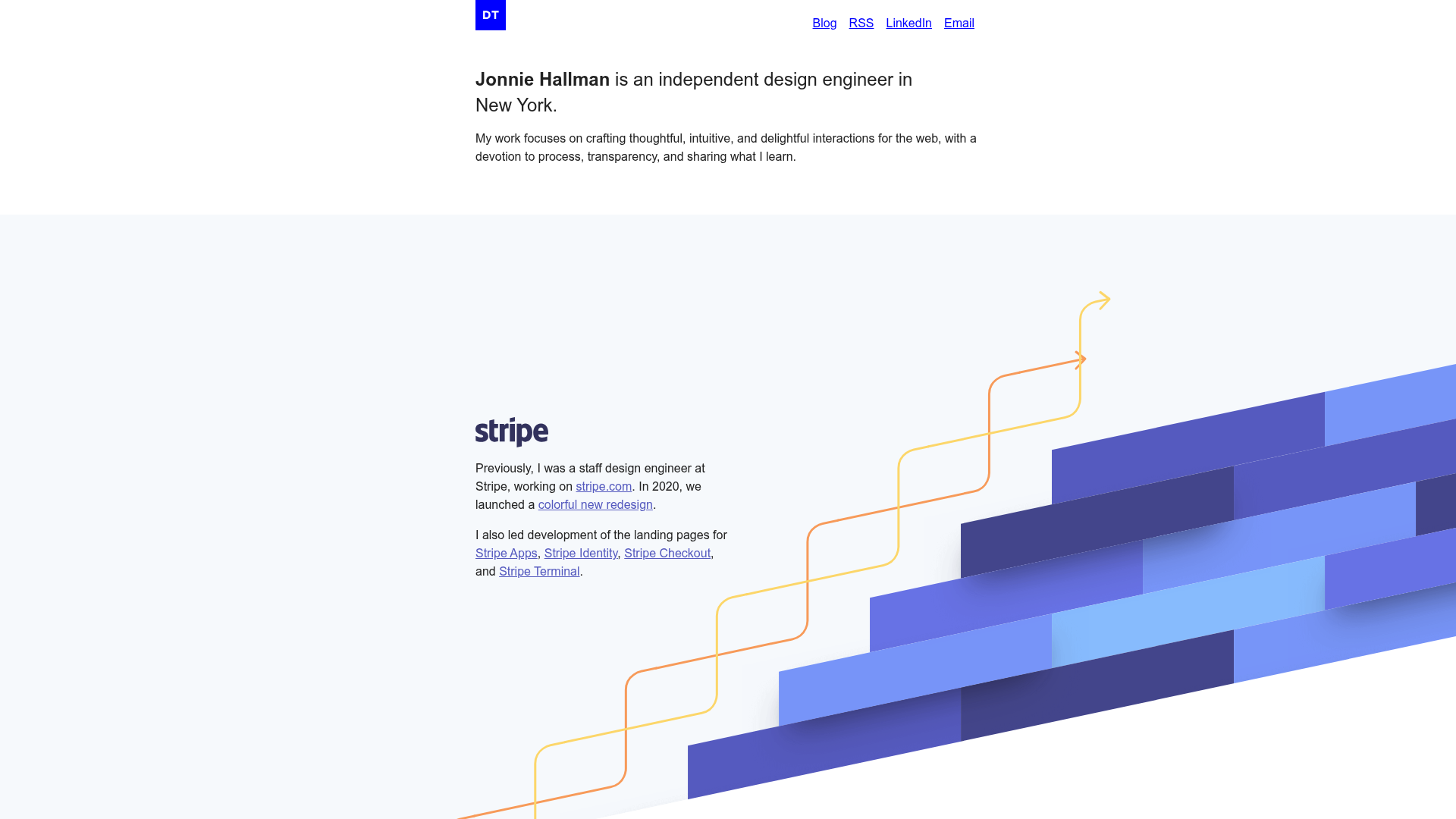
Overview
This portfolio serves as a masterclass in high-end design engineering, using a modular "block" architecture to showcase professional case studies through custom-branded sections. It transitions from a clean minimalist landing experience into a series of immersive, scroll-driven interactive stories. It is a premier reference for builders wanting to combine professional credibility with advanced front-end storytelling techniques.
Design System
- Color Palette & Visual Hierarchy: The site uses a dynamic accent color system (defined via CSS variables like
--accent-color). Each section adopts the brand identity of the client (Stripe blue, FiftyThree orange, Dropbox blue) against a neutral white or light grey base. This creates a clear visual pivot between projects. - Typography: The system relies on a clean, sans-serif stack with high-impact bold headings using
<h1>and<strong>tags. Body text is set with generous line-height for readability, and links are subtly underlined, adopting the section's accent color for emphasis. - Page Structure: The layout follows a linear vertical flow. It begins with a minimalist intro (
IntroCopy), followed by project-specific blocks (Stripe,Casper,Carousel,FiftyThree), and concludes with a call-to-action (OutroCopy). - Reusable Components:
- Brand Blocks: Modular
<section>containers that handle background colors and spacing. - Sticky Animation Container: A unique hardware visualization seen in the FiftyThree section using
position: stickyand layered PNGs (--partSrc) to assemble an object as the user scrolls. - Parallax Layers: The
CushionandDesignTownsections utilize aParallaxcomponent with varying--parallax-depthvalues for 3D depth effects.
- Brand Blocks: Modular
- Interaction and Motion: The site is heavily scroll-orientated. Notable patterns include scroll-triggered hardware assembly (the Pencil), parallax image stacking, and responsive video embeds that act as ambient background elements.
- Responsive Behavior: The blocks use CSS variables for width and height (e.g.,
--casper-width,--casper-scale), suggesting a fluid scaling system that maintains aspect ratios for complex animations on different viewport sizes. - Implementation Clues: Built using Nuxt.js (based on the
__nuxtid), with scoped CSS (indicated bydata-vattributes). It utilizes a Contentful-driven backend (images.ctfassets.net) to serve assets.
Use Cases
- Who should clone this pattern: Design engineers, senior front-end developers, and creative directors who need a portfolio that demonstrates technical execution as much as visual taste.
- What products can remix it effectively: Highly visual SaaS landing pages, physical product launch microsites (using the hardware assembly patterns), and long-form interactive journalism.
- Practical remix directions: Swap the client project sections for service offerings or product features. The "sticky-stacking" logic used for the FiftyThree pencil can be repurposed to show the internal components of tech hardware or the layers of a software stack.
- Suggested clone scope: Start by cloning the
CopyandBlocksstructure to establish the modular grid, then focus on a single interactive section like theFiftyThreesticky assembly for high-impact technical demonstrations.
Related Inspirations
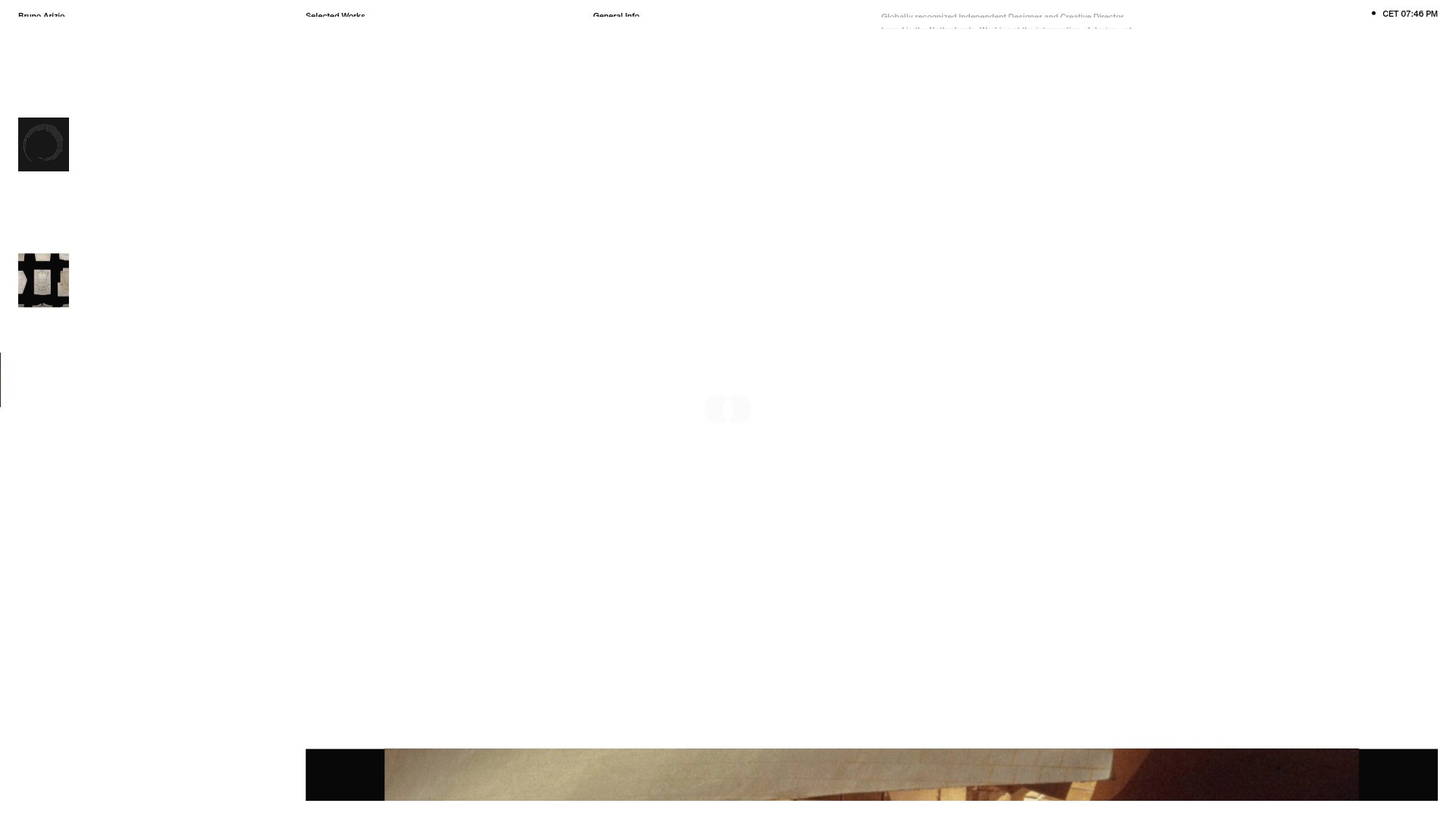
Bruno Arizio Designer Portfolio Website
A minimalist creative director portfolio featuring a clean typographic layout, side-aligned image previews, and high-contrast spacing patterns suitable for luxury or design showcases.
Vita Architecture Portfolio Landing Page
A minimalist, high-end architecture portfolio featuring a custom canvas-based image gallery, split-text animations, and a project slider with dynamic image masks.
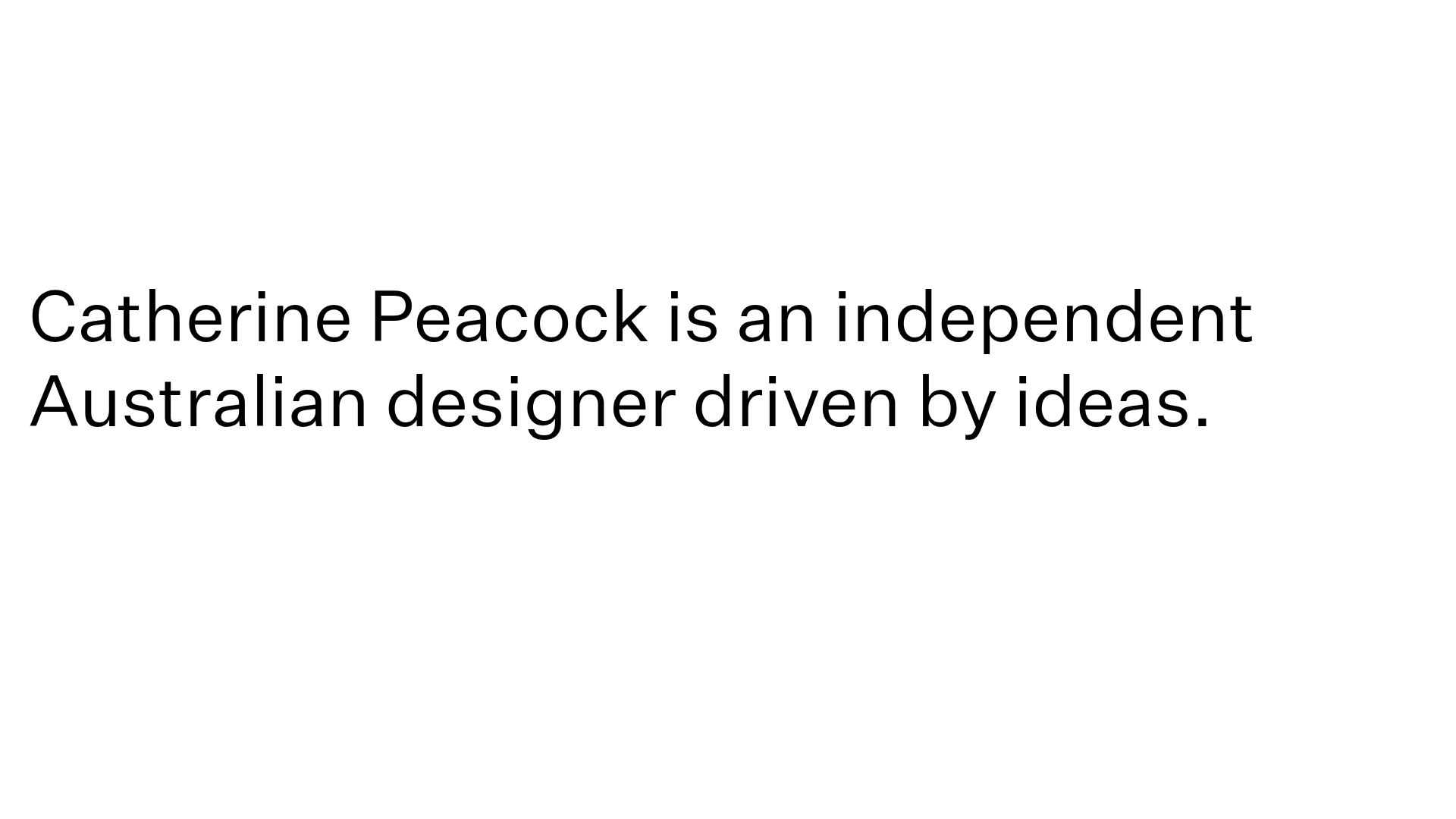
Catherine Peacock Designer Portfolio Home
A minimalist portfolio layout featuring a vertically stacked masonry project grid, sticky navigation with animated icons, and offset typography.
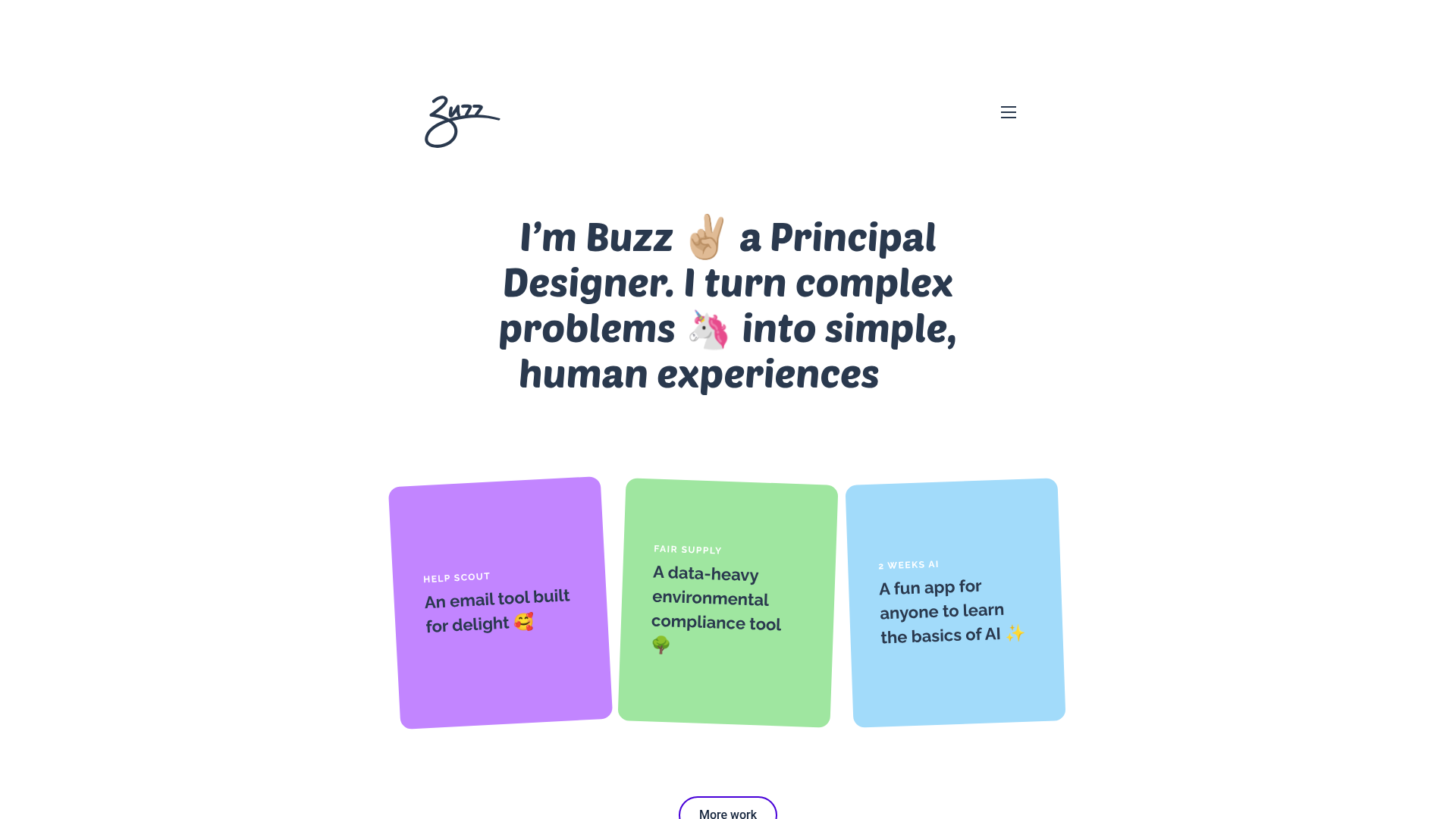
Buzz Usborne Designer Portfolio Landing
A minimalist portfolio layout featuring a large typography-driven hero section with animated emojis and a responsive grid of colorful, card-based project previews.
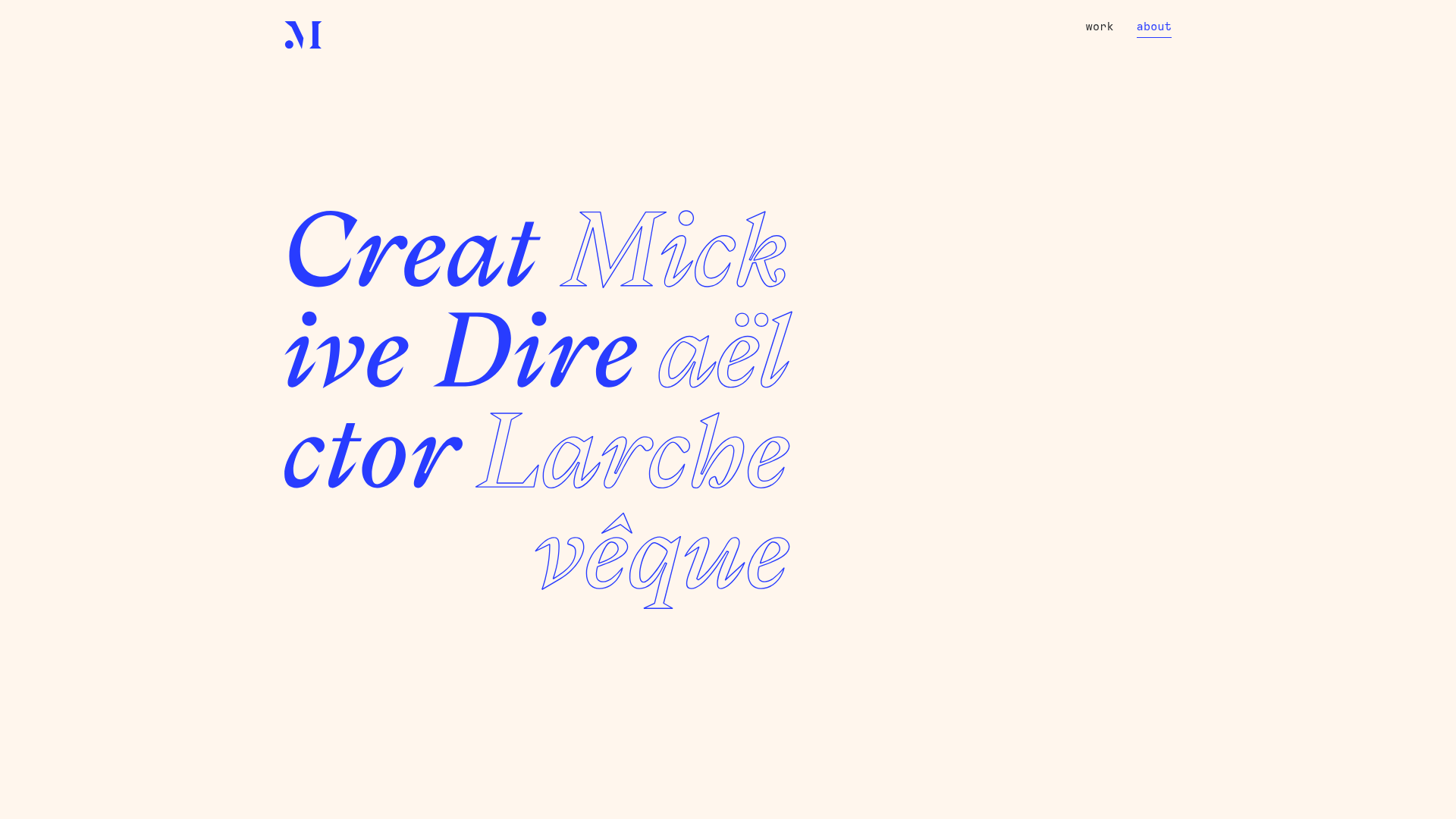
Mick Larchevêque Creative Director Portfolio
A minimalist portfolio featuring a typography-driven hero section with mixed solid and outlined fonts, a text-based project list, and full-screen layout transitions.
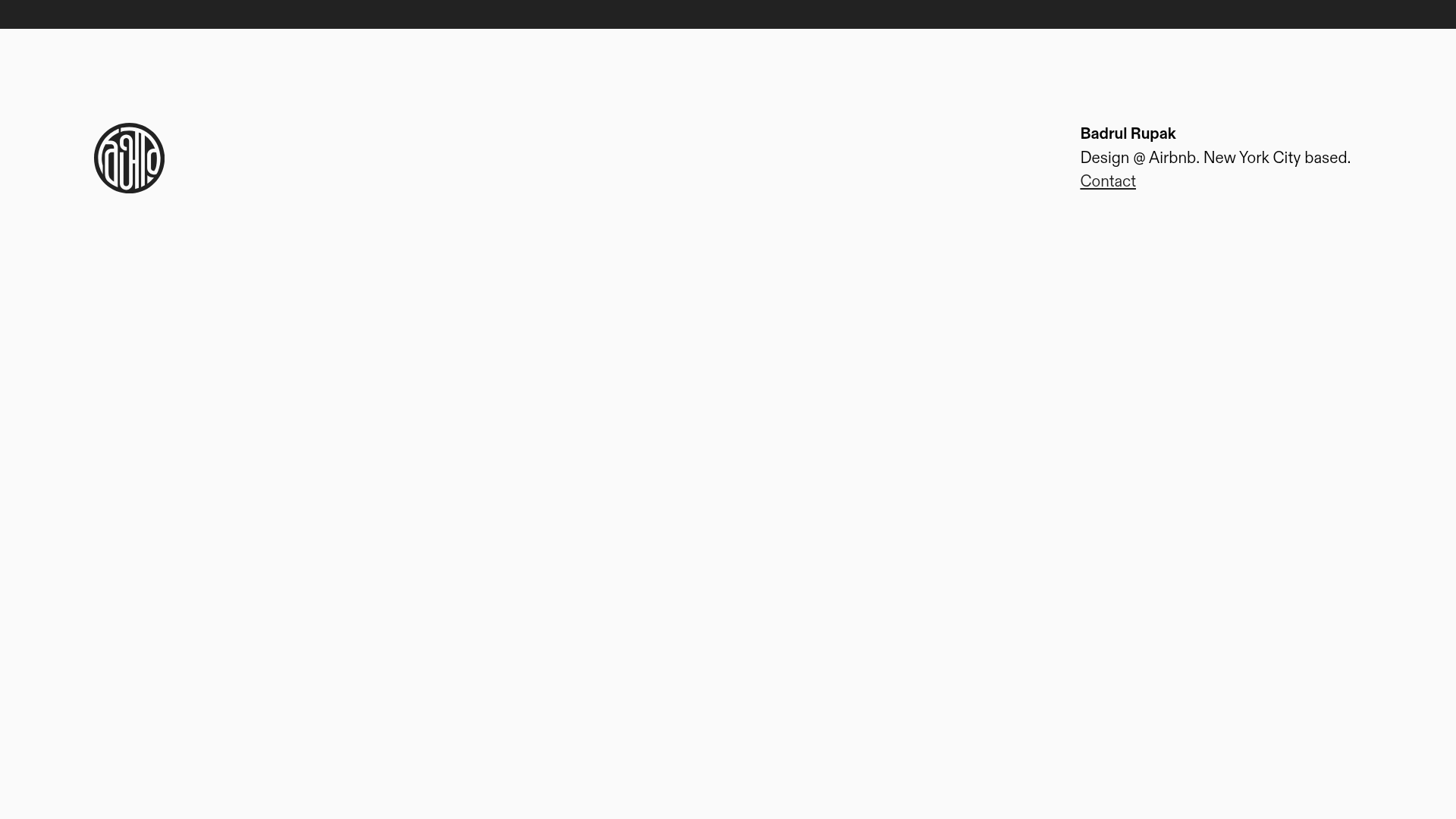
Badrul Rupak Minimal Portfolio Home
A minimalist personal portfolio layout featuring a fixed header with a four-column grid, integrated logo, and simplified typography for a clean professional presence.
